
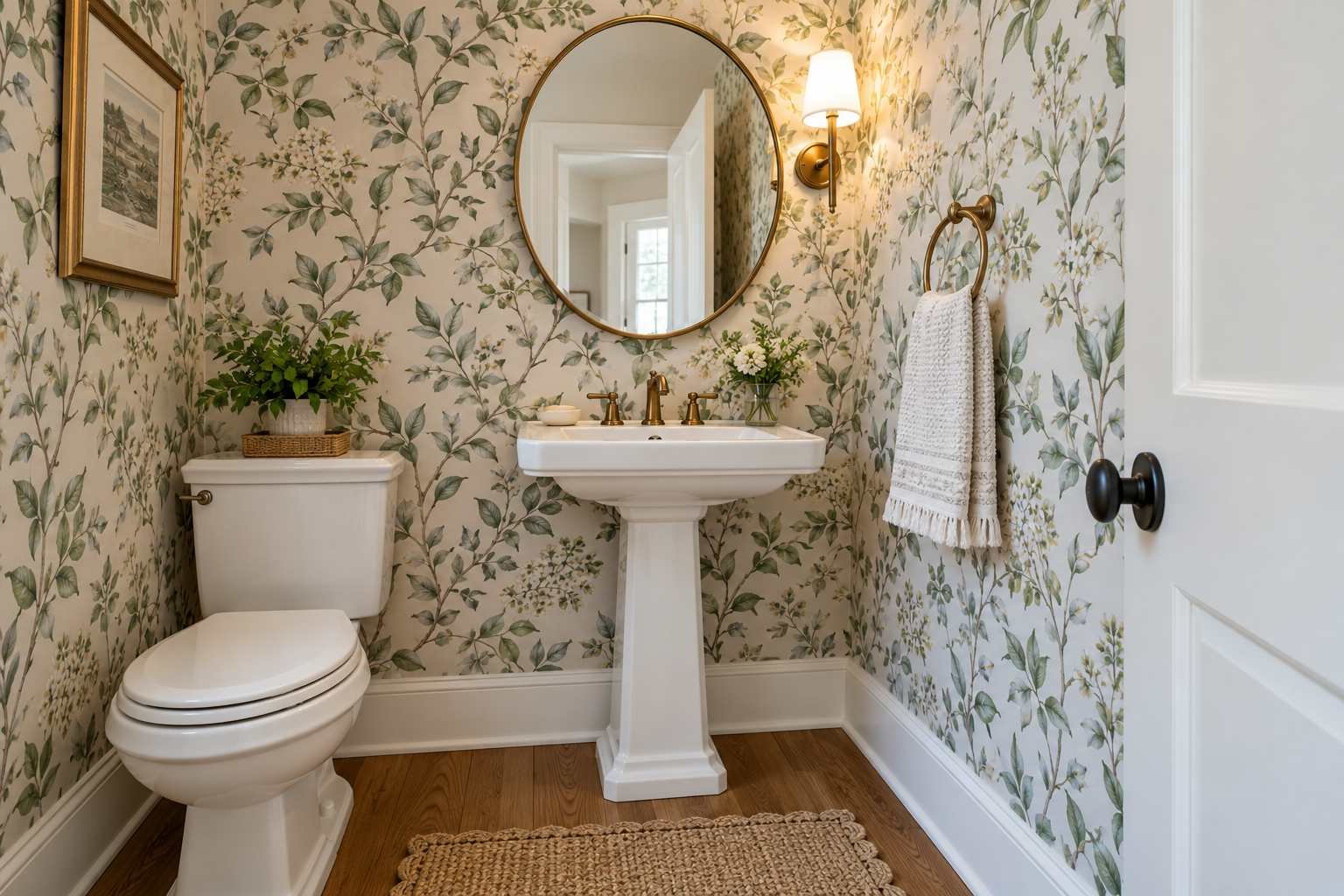
A powder room may be one of the smallest rooms in your home, but guests often use it—and notice its details. Thoughtful powder room ideas can make the space feel welcoming without requiring a full remodel. A fresh wall color, a well-chosen mirror, better lighting, or a useful little vanity can change the room’s mood while keeping it practical.
Start with the room you have
Before buying paint or fixtures, look at how the room works. Measure the walls, note where the door swings, and check the positions of the toilet, sink, light, and any window. A beautiful vanity or large mirror can feel awkward if it blocks a walkway or makes the door harder to open.
Decide what you want to improve most. Is the room too dark? Does the sink area feel cramped? Is there nowhere to put hand towels or spare toilet paper? Identifying the main problem helps you spend your budget where it matters.
The best powder room ideas fit the shape of the room and the way your household uses it. A compact space may need only a new mirror and better lighting, while a dated room with worn fixtures could benefit from a broader update.
1. Choose a color that sets the mood
Paint is one of the simplest ways to change the feel of a half bath. Soft white, warm beige, pale sage, or light gray can make the room feel bright and relaxed. Deep green, navy, or charcoal can create a more dramatic look, especially when paired with a warm mirror frame or brass hardware.
You don’t have to paint every wall the same color. A darker ceiling or a single accent wall can add depth without overwhelming the room. If the powder room is connected to a hallway, choose a color that feels related to nearby spaces, even if it is bolder.
Try sample swatches on more than one wall. Color can look different beside tile, under artificial light, or at different times of day. Give the samples a little time before choosing.
2. Add wallpaper for pattern and personality
Wallpaper can give a powder room a distinct look without requiring much material. Botanical prints, fine stripes, small geometric patterns, and scenic designs are all possibilities. A pattern on every wall can make the space feel intentionally decorated; a single papered wall offers a quieter update.
Look at the size of the pattern as well as its color. Large motifs make a confident statement, while a small repeat can feel more subtle. If the room already has decorative tile or a bold mirror, a calmer wallpaper may help the different elements work together.
Choose a product that suits the room’s conditions and follow its installation and care directions. Keep the finish and pattern in mind when deciding where to place a towel ring, mirror, or light, so those fixtures don’t hide the parts of the design you want to see.
3. Make the vanity a focal point
The vanity often anchors the room. If you have space, a petite cabinet can add useful storage while creating a finished look. A warm wood finish feels natural; painted blue or green can add color; and a simple white cabinet can blend into a bright room.
Check the full dimensions before ordering. The depth matters just as much as the width, particularly when the door opens toward the sink. Also confirm whether the price includes the countertop, basin, faucet, and drain parts, since some retailers sell them separately.
Choose hardware that’s comfortable to use and fits the overall style. A small change—such as swapping dated knobs for simple brushed-metal pulls—can update an existing vanity without replacing it.
4. Consider a floating sink or vanity
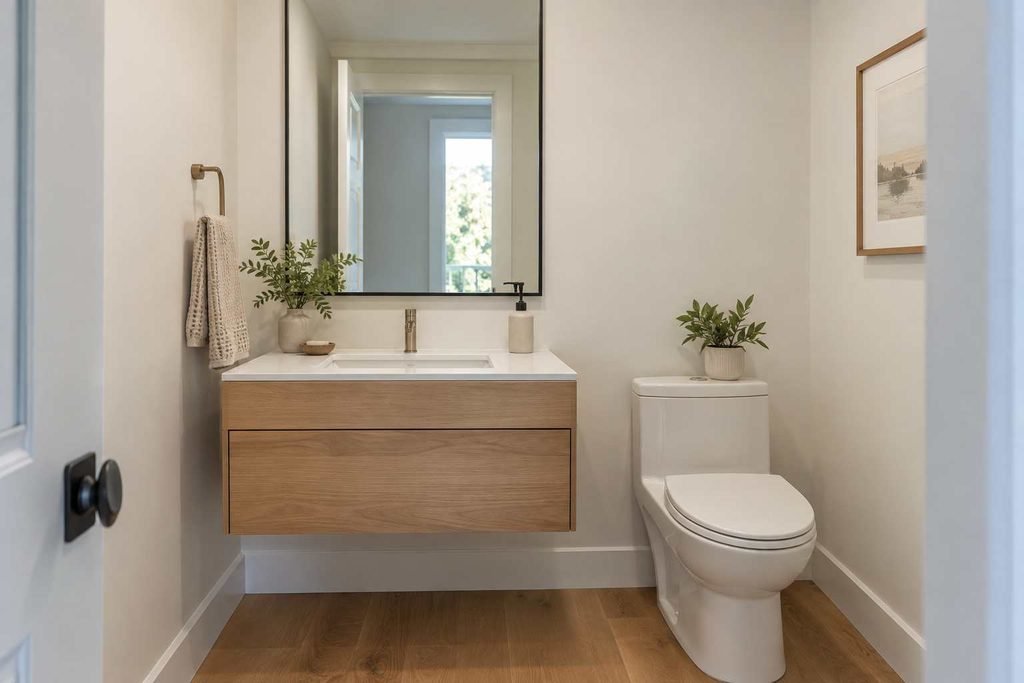
A wall-mounted sink or vanity leaves open floor beneath it, which can make a tight room feel less crowded. It also makes the floor easier to clean. This style suits modern interiors, but it can work in a range of homes when paired with warm finishes and softer accessories.
A floating vanity needs secure installation and suitable wall support. Before choosing one, confirm what is behind the wall and check the manufacturer’s mounting instructions. If you’re unsure how to attach it safely, ask a qualified installer.
The open space beneath a floating piece can be useful, but avoid turning it into a storage pile. One small basket may be handy; several bins can make the room feel cluttered.
5. Use a pedestal sink where space is tight
A pedestal sink takes up less visual space than a cabinet and can be a good fit for a very narrow room. Its classic shape works with traditional, cottage, and transitional styles. The tradeoff is storage: there’s little or no cabinet space below the basin.
If you choose a pedestal sink, plan where everyday supplies will go. A medicine cabinet, shallow wall shelf, or small freestanding storage piece can hold essentials without crowding the floor. Keep frequently used items within reach, especially hand soap and a hand towel.
A compact sink should still feel comfortable to use. Check the basin’s width and depth, and consider how the faucet will sit over it. A sink that looks elegant but splashes easily may become frustrating in daily use.
6. Pick a mirror that suits the wall
A mirror reflects light and gives people a place to check their appearance, so it’s both decorative and practical. A round mirror can soften a room with straight lines. A rectangular mirror can visually extend a narrow wall, while an arched shape adds a gentle architectural detail.
Think about scale. A tiny mirror above a wide sink can look disconnected, while an oversized one may compete with nearby lights or trim. Measure the available wall and consider the height of the people who will use the room.
A framed mirror adds another finish to the design. Choose a frame that coordinates with the faucet or light fixture, or use a contrasting material to make it stand out. The pieces don’t need to match exactly; a shared color or shape can be enough to tie them together.
7. Improve the lighting
A single ceiling light can leave the mirror area shadowy. If the layout allows, add wall sconces beside the mirror or a suitable fixture above it. Balanced light makes the sink easier to use and gives the room a more finished feel.
Choose fixtures rated for the location and have electrical work completed according to local requirements. If you’re changing wiring or moving a fixture, consult a qualified electrician. A decorative light still needs to be appropriate for the room.
Warm or neutral light often feels comfortable in a small half bath. Before committing, check how the bulbs look alongside your paint, wallpaper, and mirror. A finish that looked warm in a store may appear different in your home.
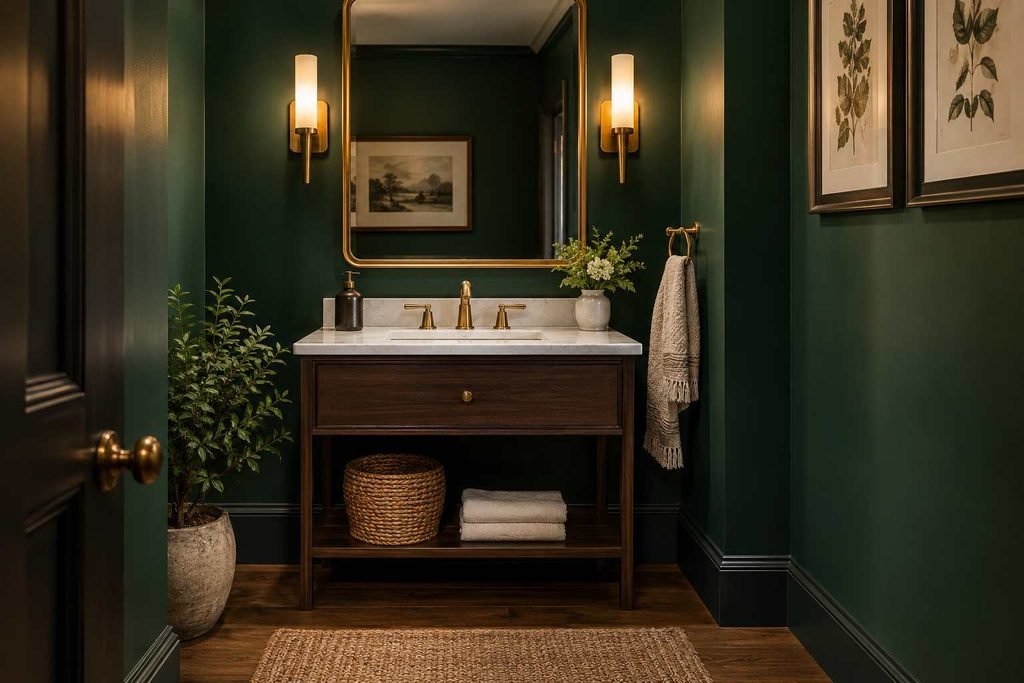
8. Try a deep, dramatic color palette
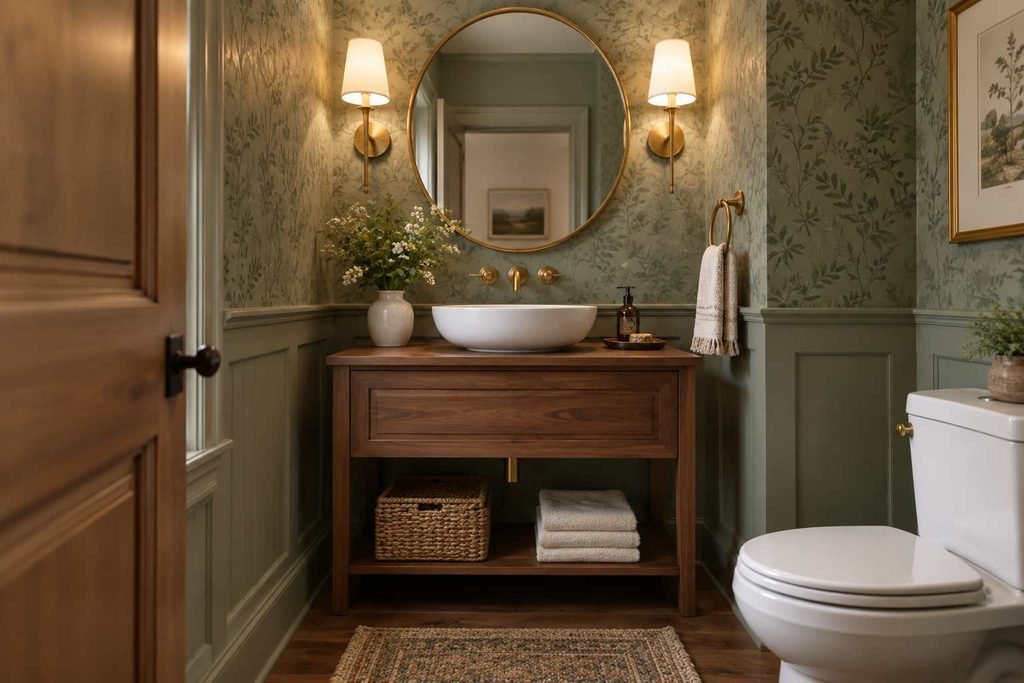
Because a powder room is small and used for short visits, it can be a good place to try a color you might hesitate to use in a larger room. Deep green, plum, navy, or terracotta can create a cozy, memorable look.
Balance dark walls with enough light. A large mirror, reflective faucet finish, or pale sink can keep the room from feeling too closed in. If there is no window, think carefully about the lighting plan before painting everything a deep shade.
You can also use a dark color on the vanity or lower wall, leaving the upper wall lighter. That approach adds contrast while keeping some brightness around eye level.
9. Use a bold wallpaper with simple fixtures
If you want the walls to do most of the decorating, keep the other elements relatively simple. A striking print can pair well with an uncomplicated sink, clean-lined mirror, and understated hardware. That gives the pattern room to stand out.
When choosing wallpaper, bring home a sample if possible. Look at it beside the floor, trim, and sink rather than judging it alone. Small rooms can make a pattern feel more intense than it did in a large showroom.
10. Add paneling or wainscoting
Wall paneling can add texture and protect the lower portion of the wall from scuffs. Painted beadboard, simple box molding, or vertical slats can suit different styles. A contrasting color above and below the trim line can make the room feel more considered.
Keep the trim scale in proportion to the room. Thick molding may overwhelm a very narrow half bath, while a simpler profile can add detail without taking over. Plan around the sink, toilet, and any existing baseboards.
11. Hang art that can handle the setting
A small print or framed photograph can make the room feel more personal. Choose art that relates to the colors or mood in the rest of the space. One larger piece often looks calmer than a group of tiny frames in a tight area.
Bathrooms can have changing humidity, so use suitable materials and keep artwork away from direct splashes. If you’re unsure, use a protected frame or choose a wall location farther from the sink.
12. Make use of vertical space
When floor space is limited, look upward. A narrow shelf above the toilet can hold a small plant, folded hand towels, or a spare roll of toilet paper. A tall, slim cabinet may offer extra storage without using much wall width.
Keep shelves easy to reach and avoid placing heavy objects above areas where people stand or sit. A small room can become visually busy quickly, so leave some open space rather than filling every wall.
13. Choose finishes that work together
The faucet, cabinet pulls, towel ring, light fixture, and mirror frame all contribute to the room’s look. Matching every finish can feel formal, while mixing too many unrelated ones can feel accidental. Try choosing one dominant finish and one accent.
For example, a polished nickel faucet can work with a warm wood mirror frame and a small brass light. Repeat each finish at least once if you want the mix to feel intentional. If the room already has strong tile or wallpaper, simpler metal finishes can help balance it.
14. Give towels and accessories a place
A hand towel should be easy to reach from the sink. A ring beside the basin works in many layouts, while a short bar may suit a wider wall. Choose a location where the towel can hang freely and dry between uses.
A small tray can keep soap and lotion together on the counter. Pick a soap dispenser and wastebasket that fit the room instead of choosing oversized accessories. These practical details help the space look tidy without making it feel overly styled.
15. Use plants if the light is suitable
A small plant can soften hard surfaces and bring a little color into the room. If the powder room has natural light, choose a plant that can thrive in those conditions. For a room with little or no daylight, a high-quality faux plant may be easier to maintain.
Keep plants away from the faucet splash zone and use a saucer to protect the counter or shelf. One small plant is usually enough. If it crowds the sink or blocks the mirror, it’s probably too large for the spot.
16. Refresh the floor without changing everything
If the floor is worn or visually dated, replacing it can make a noticeable difference. Small-format tile, simple patterns, and stone-look finishes can suit a compact space. If a full replacement isn’t in the budget, consider whether the existing floor can be cleaned, repaired, or updated with an appropriate product.
Check that the flooring is suitable for a bathroom and follow the manufacturer’s installation and maintenance guidance. A patterned floor can be a focal point, so keep the wall treatment simpler if both surfaces would otherwise compete.
17. Bring in texture with natural materials
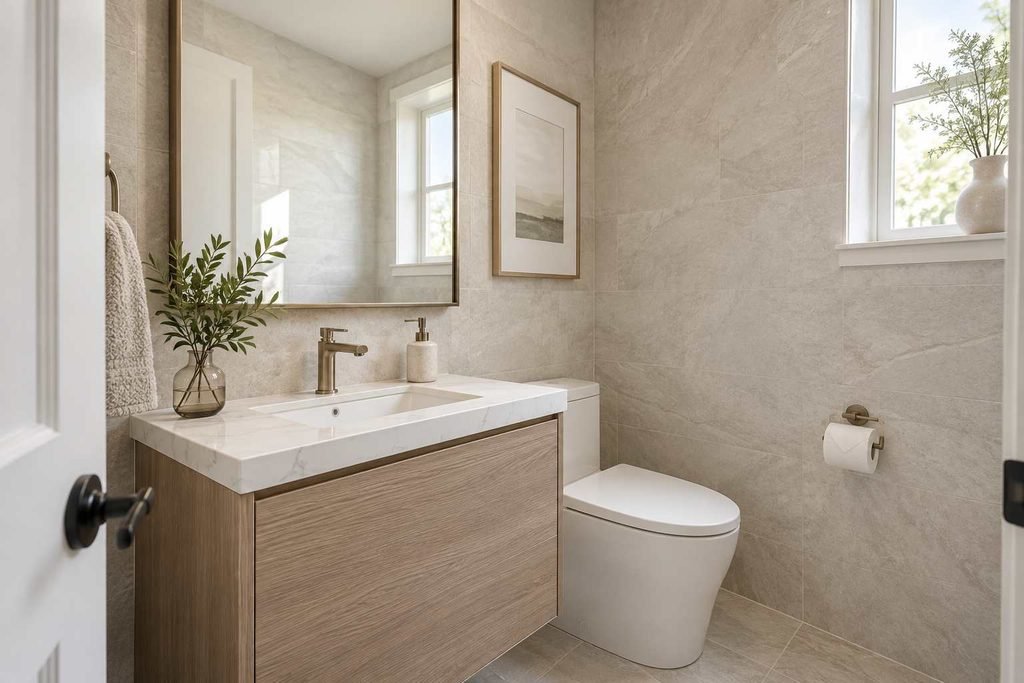
Wood, woven baskets, linen towels, and handmade ceramics can make a small room feel warmer. These materials soften the look of tile, glass, and metal. A wood-framed mirror or a simple woven basket can add texture without requiring a large renovation.
Bathrooms need products that can cope with the conditions in the room. Keep natural materials away from repeated splashes and follow care instructions. Use a basket for spare rolls or hand towels only if it fits neatly and doesn’t interfere with movement.
18. Keep the countertop uncluttered
A crowded counter makes even a well-designed room feel smaller. Store backup products elsewhere and leave out only what guests are likely to need, such as hand soap and a small lotion bottle. A wall-mounted soap dispenser or a slim tray can help keep the surface orderly.
If there’s no built-in storage, consider a shallow cabinet or medicine cabinet. Measure carefully so it doesn’t interfere with the mirror, light, or door. Storage should make the room easier to use, not create another obstacle.
19. Make a small room feel connected to the rest of the home
The powder room can have its own personality while still feeling connected to nearby rooms. Repeat a color from the hallway, use similar hardware finishes, or echo the shape of a light fixture elsewhere in the house.
A strong design doesn’t require every room to look alike. One bold wallpaper or a colorful vanity can give the half bath a distinct identity while a few shared details keep it from feeling unrelated.
20. Update in stages if your budget is limited
You don’t have to renovate everything at once. Start with changes that make the room more useful or improve what bothers you most. Paint, a new mirror, better bulbs, fresh towels, or updated cabinet hardware can have an impact for less than replacing every fixture.
If you’re planning a larger renovation, set aside a budget for labor and unexpected repairs as well as materials. Confirm measurements and product details before ordering. A clear plan can help avoid buying pieces that don’t fit or need additional work to install.
How to plan a powder room update
Write down what you want to change, take measurements, and set a realistic budget. Then choose the largest elements first: wall treatment, sink or vanity, mirror, and lighting. Smaller details like towels, soap dispensers, and art can come later.
Before buying fixtures, confirm that they fit the room and work with the existing plumbing and wiring. Read installation instructions and ask a qualified professional about work that involves electrical changes, plumbing relocation, wall support, or local building requirements. That small bit of planning can help prevent expensive surprises.
Frequently Asked Questions
What should every powder room include?
At minimum, plan for a toilet, a sink, hand soap, and a hand towel that’s easy to reach. A mirror and good lighting make the room more comfortable to use. Storage is helpful, but it can be added through a medicine cabinet or shelf if there’s no room for a vanity.
How can I make a small powder room look bigger?
Use good lighting, keep the floor as visible as possible, and avoid filling every surface with accessories. A mirror can reflect light, while a lighter wall color may help the room feel open. A floating sink or vanity can also reveal more floor, depending on the layout.
Is wallpaper suitable for a powder room?
It can be. Choose a product suited to the room and follow its installation and care instructions. Make sure the room has appropriate ventilation and avoid placing wallpaper where it will be repeatedly splashed.
Where should I put a hand towel?
Place it close to the sink so guests can reach it after washing their hands. A towel ring or short bar may work, depending on the available wall space. Check that the towel won’t brush against the toilet or block a door.
How do I decorate a powder room on a small budget?
Start with paint, updated hardware, a new mirror, or better lighting. Fresh towels and a simple soap dispenser can also make the room feel more finished. If you replace fixtures, confirm the measurements and compatibility before ordering.
Conclusion
A powder room doesn’t need a large footprint or an expensive renovation to feel memorable. Color, wallpaper, a thoughtful mirror, better lighting, or a small vanity can add personality while keeping the room comfortable for everyday use. Choose powder room ideas that suit your layout and budget, then build the look with a few useful details. The result can feel welcoming to guests and work better for your household, too.