
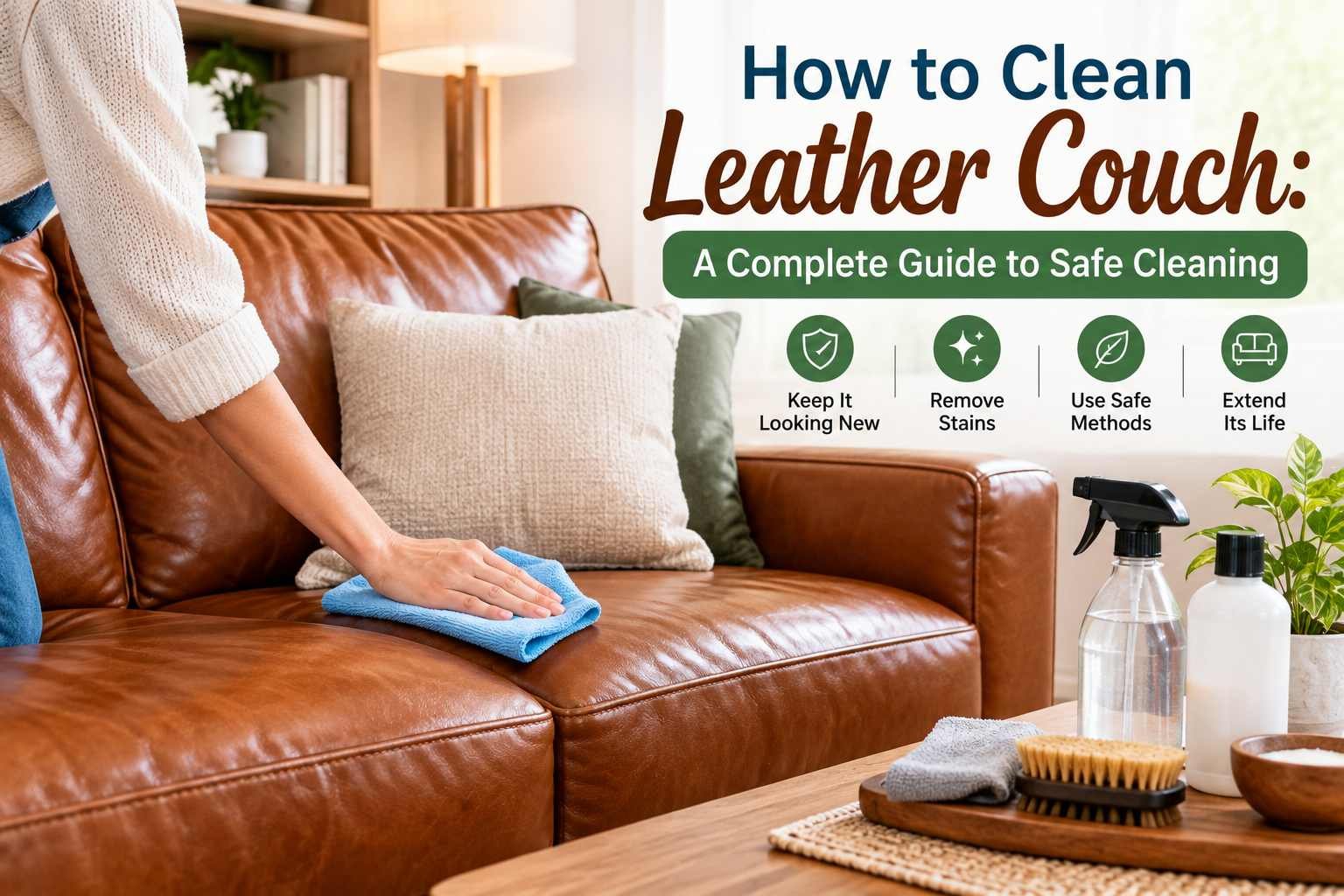
If you’re wondering how to clean leather couch upholstery without leaving streaks, fading the color, or drying out the surface, start by checking the care instructions for your specific sofa. Leather finishes vary, so a cleaning method that works on one couch may damage another. The safest routine is usually straightforward: remove loose dirt, test an approved cleaner in a hidden spot, and wipe gently.
A leather sofa is often one of the most-used pieces of furniture in a home. It collects dust along the seams, crumbs between cushions, and marks from everyday life. Regular light care can help it stay inviting, but using the wrong product or too much moisture can create problems. Treat this guide as a starting point, then follow the instructions from your couch’s manufacturer.
Before you begin: Identify the leather and read the care label. Finished leather, aniline leather, suede, nubuck, and synthetic leather can have different cleaning requirements. Manufacturers may recommend different products for different materials.
What You’ll Need
Gather your supplies before you start, so you don’t have to leave a damp spot unattended while looking for a cloth.
- A vacuum with a soft brush or upholstery attachment
- Two clean, soft microfiber or lint-free cloths
- A leather cleaner approved for your couch’s material
- A leather conditioner, if the manufacturer recommends one
- A small amount of clean water, only if the care instructions allow it
Avoid using anything abrasive, such as a rough sponge, stiff brush, or scouring pad. These can scratch the finish. Paper towels may also leave lint or break apart when damp. A soft, clean cloth gives you more control.
How to Clean Leather Couch Upholstery Step by Step

1. Find out what kind of leather you have
Look for a care tag beneath the couch or cushions, check the product manual, or search the furniture maker’s care page using the model name. If you can’t tell whether the couch is genuine or synthetic leather, contact the manufacturer before applying a cleaner.
This step matters because “leather” covers a range of materials and finishes. A product intended for smooth, finished leather may be unsuitable for suede or nubuck. Even two finished-leather couches can respond differently depending on their dyes and protective coatings.
2. Test a product before cleaning the visible surface
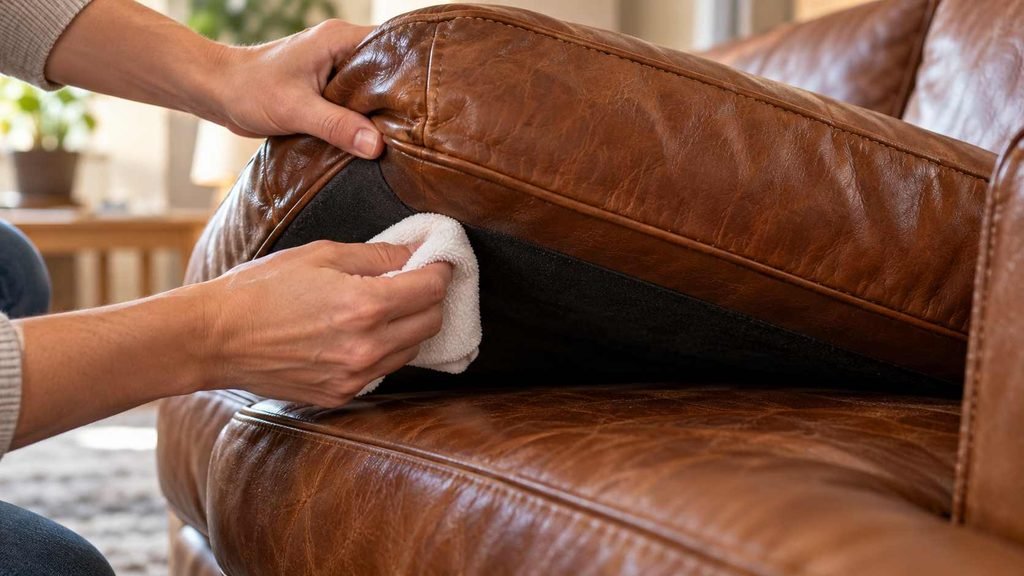
Choose a small, hidden area, such as the underside of a cushion or the back of the couch near the floor. Apply the cleaner as directed, then allow the test area to dry fully. Look for a change in color, texture, sheen, or feel.
If the test area becomes sticky, noticeably darker, lighter, or rougher, stop. Don’t assume a product is safe just because it says “leather” on the label. Test conditioner separately, too, because it may affect the color or finish differently from the cleaner.
3. Remove cushions and loose debris
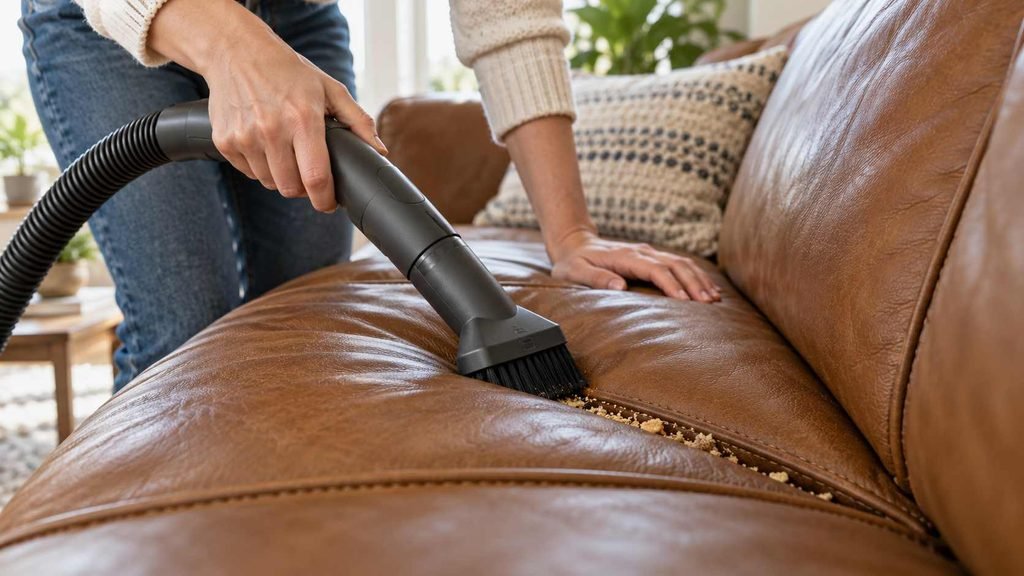
Take off removable cushions if your couch is designed for them to be moved. Pick up large crumbs by hand, then vacuum the seat, cushion edges, seams, and crevices with a soft attachment. Hold the nozzle lightly above the leather rather than pressing it down.
Dust and grit can scratch leather when pushed around with a cloth. That’s why vacuuming first is helpful. Regularly vacuuming with an upholstery attachment is also recommended for leather furniture care.
4. Apply the cleaner gently
Follow the product directions. If the label permits, put a small amount of cleaner on a soft cloth instead of spraying it directly onto the couch. Work on one manageable section at a time and use light, even strokes.
There’s no need to scrub hard. Gentle wiping is less likely to disturb the color or damage the finish. If a dirty area needs another pass, let it dry first and repeat only as directed. Use a clean section of cloth as it picks up soil, so you don’t spread dirt across the rest of the sofa.
5. Wipe away residue and let the couch dry
Check the cleaner’s label for whether it should be wiped off. If it calls for a damp cloth, use only the amount of moisture allowed by the instructions. Don’t leave standing water or soak the leather.
Let the couch air-dry naturally. Keep it away from direct sun, heaters, radiators, and hair dryers. Heat can dry leather, and strong light can contribute to fading over time. La-Z-Boy advises keeping leather away from intense light and heat sources.
6. Condition only if your couch needs it
Conditioner is not a universal final step. Some leather-care routines recommend it; other materials may require a different product or no conditioner at all. Follow the furniture maker’s guidance and the conditioner label. If it is approved for your couch, apply a small amount to a clean cloth and spread it evenly.
Let the leather dry completely before conditioning. Applying a product to a damp surface can leave uneven results. Test the conditioner in a hidden spot first, and don’t use more than the instructions recommend.
How to Clean Leather Couch Cushions and Seams
Cushions often collect dust, skin oils, pet hair, and crumbs. If they’re removable, lift them out and clean the surface beneath them before putting them back. Check the care tag before unzipping any covers; a removable cover is not necessarily machine washable.
Use a soft vacuum attachment for seams and tufted areas. Avoid poking into the stitching with a toothpick, knife, or other sharp object. If debris is stuck deep in the seam, try loosening it with a gentle brush or vacuum. Stop if the stitching or leather begins to pull.
If your couch has synthetic leather, the cleaning directions may differ from those for top-grain leather. For example, Room & Board recommends a damp cloth for minor spills on synthetic leather and advises against soap, harsh detergents, or excess water. Check your own manufacturer’s directions rather than applying that advice to every couch.
How to Handle Spills and Stains
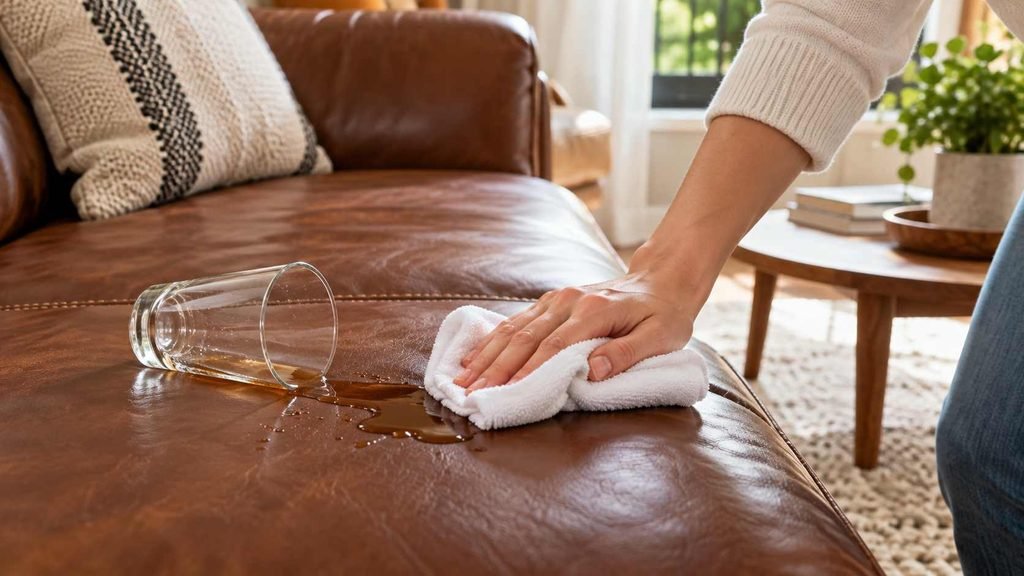
The best first move for many fresh spills is to act calmly. Grab a clean cloth and blot instead of rubbing. Rubbing can spread the spill or push it farther into the material. Then follow the care instructions for your couch.

Water or a clear drink
Blot liquid with a dry, clean cloth, pressing lightly to absorb as much as possible. Don’t wipe outward from the center of the spill. After blotting, consult your care instructions before using water or cleaner; some finishes may show water marks.
Food
Lift solid food away with a spoon or the edge of a soft cloth. Avoid scraping the surface with a fingernail or knife. Blot remaining residue, then use an approved cleaner if the care instructions allow it.
Grease or oil
Blot excess oil without pressing it into the leather. Avoid adding water or household powders unless the manufacturer recommends them. Grease can be difficult to remove, and rubbing may enlarge the mark. For a large or persistent stain, ask a leather-care professional. Room & Board also recommends professional help for large or persistent stains.
Ink
Ink can be difficult to remove without changing the finish. Don’t reach for rubbing alcohol, hairspray, nail polish remover, or another solvent unless the couch manufacturer approves it for your exact material. If the mark is noticeable, a professional may be able to treat it with less risk.
Pet accidents
Blot liquid promptly and avoid soaking the area. Don’t cover the spot with a scented spray or cleaner that isn’t approved for the upholstery. If an odor or stain remains after following the care instructions, contact a professional cleaner.
What Not to Use on a Leather Couch
When researching how to clean leather couch surfaces, you’ll find plenty of quick home remedies. But an easy-to-find product isn’t automatically safe for your particular finish. Unless the manufacturer says otherwise, avoid:
- Bleach, ammonia, and harsh household chemicals
- Abrasive sponges, stiff brushes, or scouring pads
- Large amounts of water or soaking
- Direct heat from a hair dryer or radiator
- Unapproved oils, polish, or multipurpose cleaners
- DIY mixtures that haven’t been tested on your leather
Manufacturers can differ in their recommendations, so check the product label and your couch’s care guide before trying any remedy. A hidden-area test is a sensible precaution, but it does not replace the manufacturer’s instructions.
How Often Should You Clean a Leather Couch?
There’s no single schedule that fits every household. A couch used daily by a family with pets may need more frequent attention than one in a rarely used room. Instead of deep-cleaning on a strict calendar, keep up with light maintenance and clean when the surface needs it.
A practical routine might look like this:
- Weekly: Dust the surface with a soft cloth and vacuum crumbs from the seams.
- As needed: Blot spills promptly and follow your care instructions.
- Occasionally: Use an approved cleaner when the leather looks visibly soiled.
- When recommended: Apply a compatible conditioner according to the manufacturer’s schedule.
Frequent cleaning with too much product can leave residue or alter the finish. For everyday dust, a soft cloth may be all that’s needed. If you’re unsure whether a mark requires cleaner, check the care instructions first.
Ways to Keep Leather Looking Its Best
A few small habits can reduce mess and wear:
- Position the couch away from prolonged direct sunlight.
- Keep it away from radiators and other strong heat sources.
- Blot spills as soon as you notice them.
- Vacuum between cushions before crumbs build up.
- Avoid sitting down with keys or other sharp items in your pockets.
- Follow the maker’s advice about cushion rotation and care.
- Use a throw on a high-use seat if it suits your home.
These habits won’t prevent every scratch or mark, but they can limit avoidable wear. Leather develops character with use; the goal is to care for it in a way that preserves the finish rather than trying to make it look untouched.
When to Call a Leather-Care Professional
Professional help is a good idea if the stain is large, the finish is peeling, the color has changed, the surface feels sticky, or you can’t identify the leather. It’s also sensible to stop if your cleaning attempt makes a mark spread or leaves a visible ring.
Before contacting a cleaner, note what caused the stain, when it happened, and which products you have already tried. That information may help the professional choose an appropriate treatment. For valuable or delicate furniture, asking first can be less costly than trying several products at home.
Frequently Asked Questions
What is the safest way to clean a leather couch?
Check the care instructions, vacuum loose dirt with a soft attachment, test an approved cleaner in a hidden spot, and wipe gently with a clean cloth. The safest method depends on the leather and its finish.
Can I clean my leather couch with water?
Only if your couch’s care instructions allow it. Some finishes can tolerate a lightly damp cloth, while others may show marks. Avoid soaking the surface or leaving water in seams.
Can I use dish soap on leather?
Don’t use dish soap unless the couch manufacturer specifically recommends it. Cleaning products can affect different leather finishes in different ways. Use a product approved for your couch.
How do I remove an ink stain from leather?
Avoid rubbing or applying solvents without approval from the furniture maker. Ink removal can affect the finish, so consider contacting a leather-care professional for a visible or set-in stain.
Should I condition my couch after cleaning?
Only if the manufacturer recommends conditioner for your type of leather. Let the surface dry fully first, test the product in a hidden area, and follow its label.
How can I prevent my couch from fading?
Reduce prolonged exposure to direct sunlight and intense light. Keep the couch away from strong heat sources and follow the manufacturer’s care advice.
Conclusion
The safest approach to how to clean leather couch upholstery is to identify the material, follow its care instructions, and use a light touch. Vacuum loose dirt before wiping, test any approved product in a hidden spot, and blot spills instead of rubbing them. Avoid excess moisture, unapproved household remedies, and direct heat.
A simple routine of dusting, vacuuming, and prompt spill care can keep a leather couch comfortable and presentable. For a stubborn stain, delicate finish, or visible damage, contact a professional before trying a stronger treatment.