
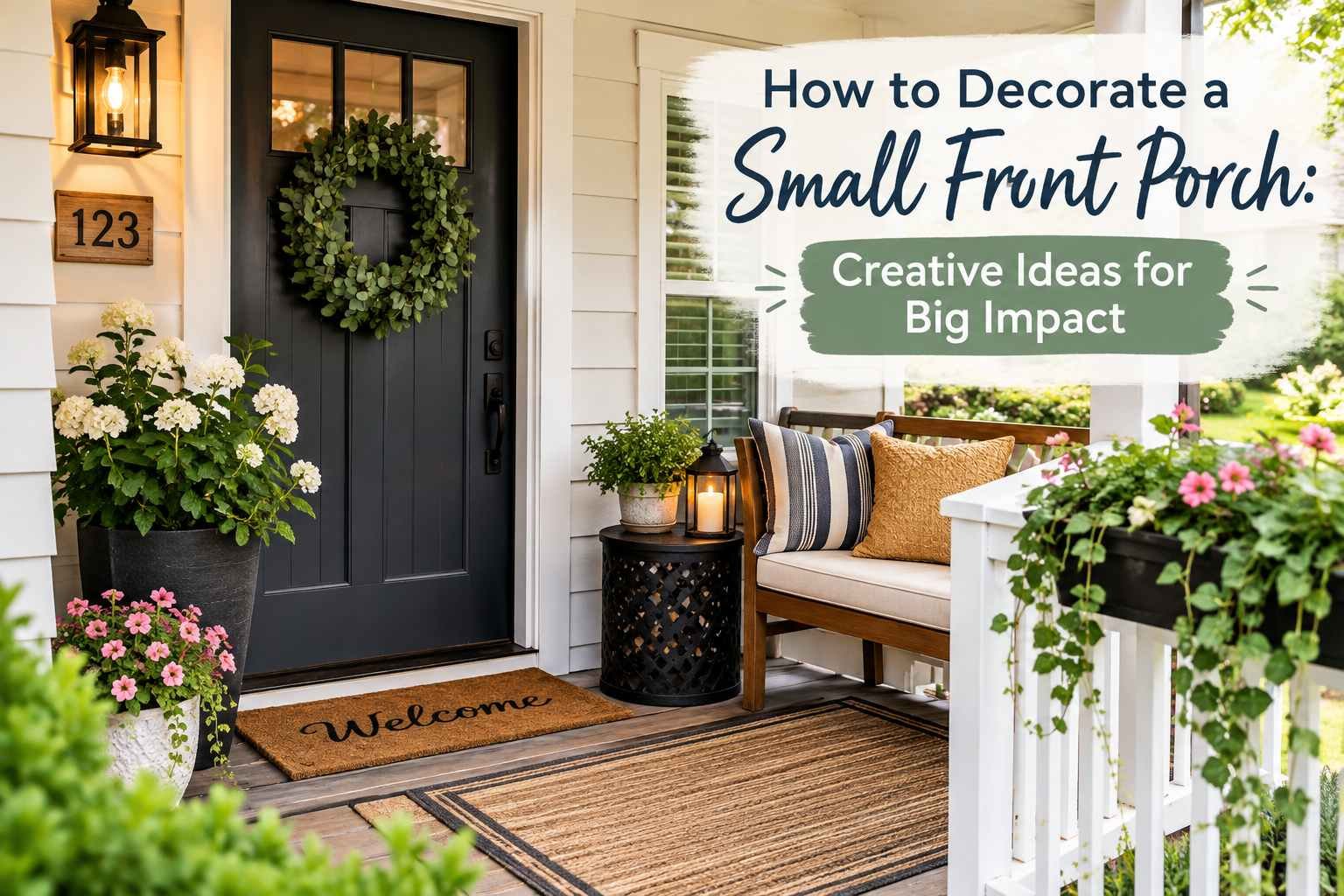
A front porch doesn’t have to be big to make visitors feel welcome in your home. Even a small entryway can become a great outdoor space with the right furniture, lighting, plants, and decorations. The key to doing this successfully is to utilize all the available area of the entrance, but don’t overdo it so that the entrance looks too busy. A skinny bench, some planters, or a nice outdoor rug could completely change the appearance of the entrance when exploring practical small front porch ideas.
The best-designed front porches will complement the design of the main body of the house. For example, if you live in a modern-designed house, then a front porch that features clean lines and simple colors will probably be more appropriate. However, if you are living in a traditionally designed house, then your front porch will likely benefit from the use of wooden detailing, classic lantern fixtures, and flowering plants. There is no need for costly renovations in order to make your home have a great first impression; however, it is possible to make many minor adjustments to achieve the same result.
1. Make a Small Seating Area on the Porch
One of the simplest and most effective small front porch ideas to decorate the front porch is to make it comfortable. It does not matter if it is a bench, rocking chair, or a set of plastic stacking chairs – as long as the furniture fits the interior, it will add coziness and value. Buying or arranging furniture on the porch should be based on ensuring that it does not cause any issues with free movement around the porch area. Thus, although a bulky chair may look great, it will make the area uncomfortable to use.
In addition, narrow front porches do not allow the installation of any additional furniture. For example, there is often no windowsill. Therefore, it is better to opt for a bench with a height of 155-165 mm or a similar seat with a backrest. This way, every family member can sit comfortably without dangling legs. As a result, for those who do not want to invest heavily in new furniture, a storage trunk with a built-in seat will be a great choice.
It will free up additional space for storing extra firewood or garden tools. Finally, when buying weather-resistant furniture, pay attention to the materials used. In this case, wood, metal, and plastic are great options. At the same time, the color of the front door must match the color of the chosen furniture and the house. It will make the porch area look more stylish and increase the value of the house.
2. Create Planters on Your Porch
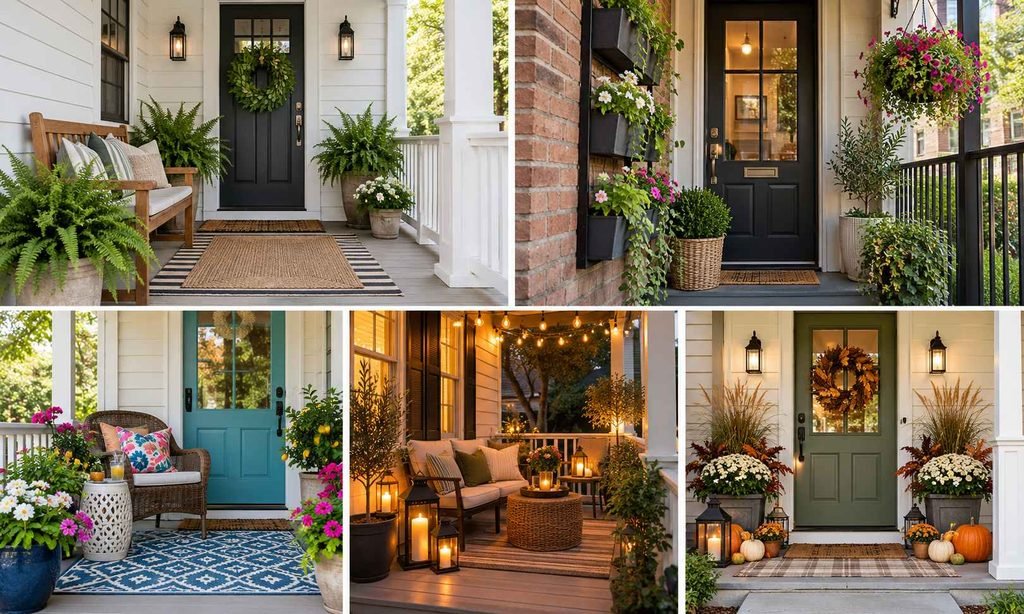
Vertical planters on the front porch create the perfect ambience outside the house without occupying the floor space. Hence, this is an affordable and elegant way to optimize the square footage. For instance, narrow upright planters can hold potted plants, flowers, and even vines. Of course, the planter should not block the front door, which means that it should have a narrow base. However, if the front porch allows for such arrangements (it does not have windows above), then hanging plants in baskets from the ceiling or walls can help to maximize square footage.
Another option is to utilize all open space on the porch, except for the door and the wall sills. Hence, wall shelves are perfect for vertical planters. Those who still want to optimize space should consider installing small planters from metal or wood. This way, buying a couple of inexpensive and rustic containers will be a perfect way to green the front yard. Such small front porch ideas are especially good for apartments since the lack of natural greenery becomes apparent when choosing neutral tones and modern furniture.
When it comes to decorating the front porch, those who want to place plants there should remember that certain flower species require morning or afternoon sun exposure. Those who lack the time or equipment to move the potted plants need to consider that every plant will flourish at a different point on the porch. Therefore, buying dwarf species is a safer option than trying to grow tall plants in small planters.
3. Choose a Statement Front Door
The front door is naturally the focal point of an entrance. A simple change, such as painting, can give the door a complete character change. Bold colors work great if your exterior is made up of more neutral colors. For a darker door, pale blues, greens, grays, and deep reds work great. Lighter colors keep things more classy with shades of white, gray, or light wood. The door’s hardware can also be updated to give the entrance a finished look. A new doorknob, house numbers, and doorbell can also be great additions. Keep in mind, the finishes should be kept to as few as possible for a more cohesive look.
Panels can also be added to update a door. Decorative panels can add architectural detail, and a darker door can feel lighter. There’s not a lot going on in the immediate area around the door. If nothing is there, it can look bare. Consider a pair of planters or a doormat. A good design of the door can also help define the purpose of a small porch.
4. Add a Layered Doormat
A doormat is a small detail, but it can make the entrance look more finished. Layering an outdoor rug beneath a smaller welcome mat adds depth and gives the porch a more decorated appearance without taking up much space. Start with a thin outdoor rug that fits comfortably within the available floor area. Then place a smaller mat on top. Rectangular shapes work well in front of most doors, while a narrow runner can suit a long entrance.
Choose materials designed for outdoor conditions. The rug should handle moisture, dirt, and regular foot traffic. Avoid thick indoor rugs that remain wet after rain. Patterns can add personality. Stripes, simple geometric designs, and subtle natural patterns work well in compact areas. If your front door already has a strong color, a quieter rug may create a better balance.
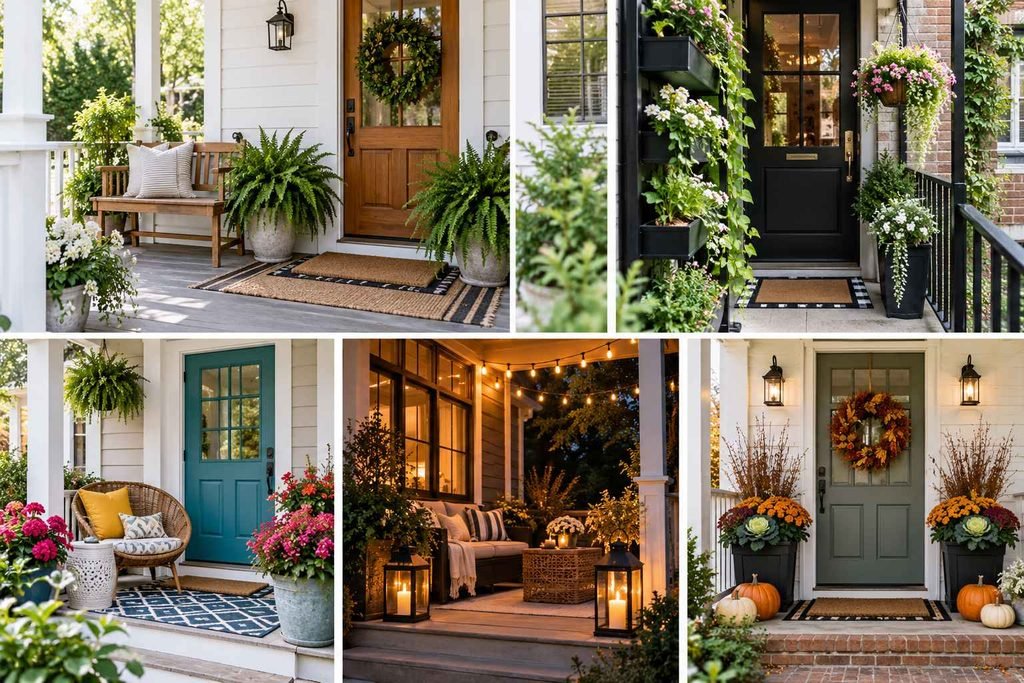
You can also coordinate the mat with your house numbers, planters, or door hardware. These small connections make the entrance feel thoughtfully designed. Keep the rug size proportional to the porch. An oversized rug can make a narrow area feel even tighter. Leave enough space around the edges so the flooring remains visible. This is one of the easiest small front porch ideas for renters and homeowners because it requires no permanent changes. Simply changing the rug can refresh the appearance of the entire entrance.
5. Install Wall-Mounted Lighting
Good lighting changes the mood of a porch after sunset. It also improves visibility around the front door and walkway. When floor space is limited, wall-mounted fixtures make more sense than large standing lamps. Sconces on either side of the door create a balanced appearance. A single fixture above the door can work when the entrance is especially narrow. Choose a size that matches the scale of the doorway rather than selecting the largest light available.
Warm lighting usually creates a welcoming atmosphere. Look for fixtures that provide enough brightness to identify the door, steps, and immediate walking area. You can also use a small pendant light if the porch has a covered ceiling. This adds a decorative element without using valuable floor space. Solar-powered lights may work well for pathways or nearby planters, especially when running new electrical wiring is difficult.
Motion-sensor lights offer another practical option for security and convenience. The fixture style should complement the home’s exterior. Black metal can suit modern and industrial designs, while brass or bronze finishes may work better with traditional architecture. Avoid using too many different light sources. A few carefully positioned fixtures usually look cleaner than several competing lights.
6. Use Hanging Planters
Hanging planters provide greenery while keeping the floor open. They work particularly well on porches where every square foot matters. You can hang one planter near the door or create a small arrangement using two or three baskets at different heights. Plants with trailing leaves can soften the edges of the porch and create movement.
Macramé holders suit relaxed or bohemian homes, while metal brackets can give a more traditional appearance. Simple ceramic or concrete planters can work well with modern exteriors. Check the strength of the surface before installing a hanging planter. Wet soil becomes much heavier, so the mounting hardware needs to support the full weight safely.
Watering also deserves attention. Choose containers with suitable drainage and avoid placing them where excess water will damage the wall or flooring. Hanging planters can add seasonal color too. Replace summer flowers with autumn plants or evergreen varieties as the weather changes. This keeps the entrance looking fresh without requiring a complete redesign.
The key is moderation. One carefully selected planter may have more impact than filling every available space with plants.
7. Create a Cozy Porch Corner
Even a tiny porch can have a dedicated corner for relaxing. Start with one comfortable chair or a narrow bench. Add a small cushion, compact table, and a plant nearby. Place the seating slightly away from the door so it does not interfere with movement. If the porch has a wall beside the entrance, use that wall as the natural backdrop for the seating.
A small outdoor pillow can introduce color without overwhelming the area. Choose fabrics made for outdoor use so they can handle changes in weather. You can also add a small lantern or wall light beside the chair. This creates a warm atmosphere in the evening and makes the corner feel intentional.
If the porch is extremely narrow, skip the table and use a narrow wall shelf instead. It can hold a small plant, candle lantern, or decorative object. Comfort matters more than the number of items. One useful seat and a few carefully chosen accessories can make a compact entrance feel like an extension of the living space.
8. Add a Narrow Bench
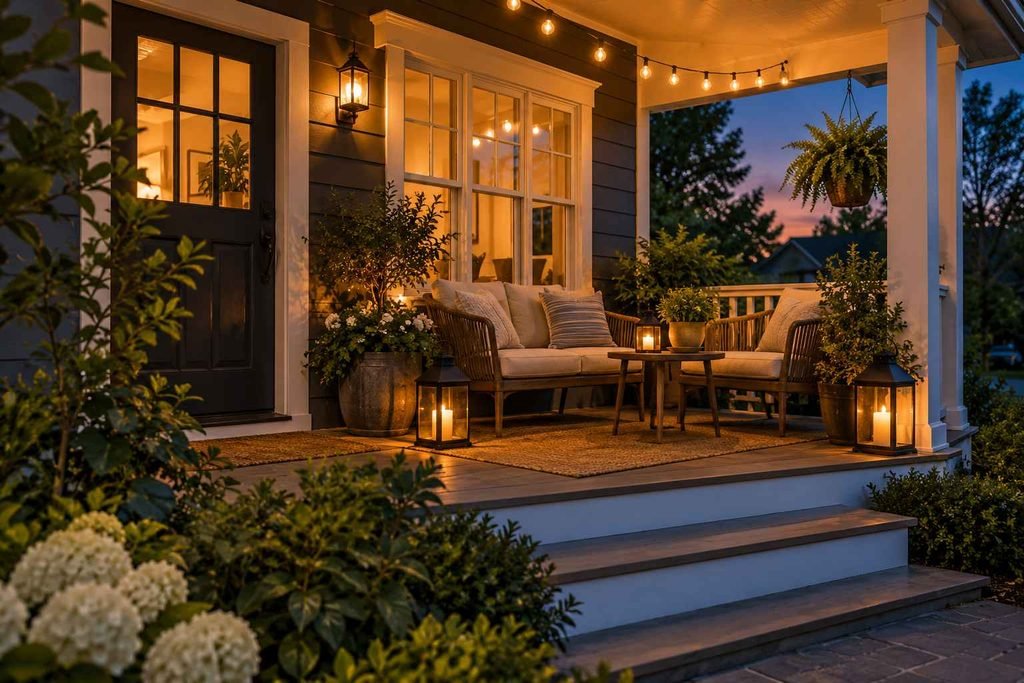
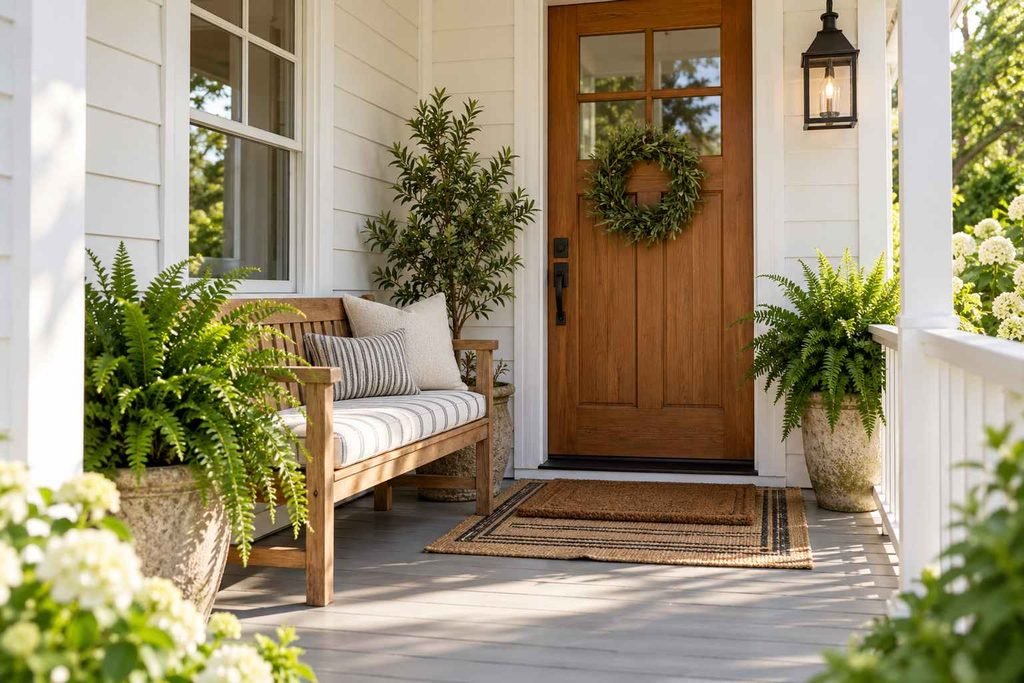
A narrow bench is one of the most useful choices for a compact porch. It provides seating without requiring the depth of a traditional outdoor chair. Look for benches designed with straight legs and a relatively shallow seat. Place one against the side wall or beneath a window if the layout allows it.
Wooden benches bring warmth and suit many architectural styles. Metal benches create a lighter visual effect, while simple painted designs can add personality. You can place a few cushions on the seat, but avoid piling up too many accessories. A compact porch benefits from clear surfaces.
Some benches include shelves underneath. This space can hold shoes, baskets, or small gardening items. Make sure stored items remain organized because visible clutter can quickly make a small entrance feel crowded. A bench can also serve as a decorative base. Place a planter, lantern, or seasonal arrangement beside it to create a small focal point.
9. Use Outdoor Rugs
An outdoor rug can visually define a porch and make hard flooring feel warmer. It works especially well when the entrance has concrete, stone, or plain tile. Choose a rug that fits the dimensions of the porch without covering every inch of the floor. Leaving a border around the rug helps the area feel more spacious.
Flat-weave rugs are practical because they are easier to clean and less likely to interfere with doors. Look for materials designed to resist moisture and fading. Patterns can make a simple porch more interesting. If the door is plain, a geometric rug can add character. If the door already has a bold finish, choose a simpler pattern.
Use the rug to connect other elements. For example, its neutral tones can repeat the colors found in the siding or trim. Remember to check how the door opens before choosing the size. A thick rug can prevent the door from swinging freely.
10. Decorate With Seasonal Accessories
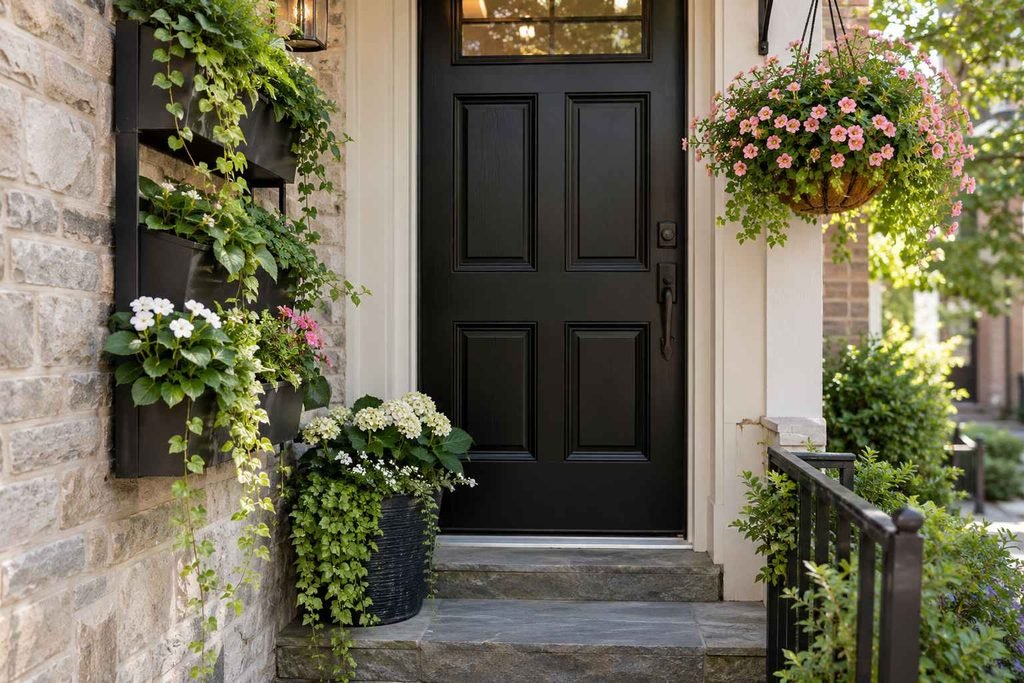
Seasonal decoration can keep a small porch interesting throughout the year. You do not need a large collection of objects. A few simple changes can create a fresh look. In spring, use flowering plants and light-colored accessories. Summer may call for brighter planters or a lightweight outdoor cushion. During fall, pumpkins, dried branches, or warm-toned wreaths can create a cozy appearance. Winter decorations can include evergreen branches, simple lanterns, and a seasonal wreath.
Use the front door as the main decorating point. A wreath takes almost no floor space and immediately changes the entrance. Avoid covering the porch with seasonal objects. Too many decorations can hide the architectural features and make the space difficult to use.
Storage becomes important when decorations change throughout the year. Keep seasonal pieces in labeled containers so you can switch them quickly without creating a mess. A restrained approach usually works best in compact spaces. Choose one main seasonal feature and support it with one or two smaller details.
11. Choose Space-Saving Furniture
Furniture selection has a major effect on how a small porch feels. Large outdoor chairs may provide comfort, but they can leave very little room for movement. Instead, consider folding chairs, slim benches, nesting tables, or stackable stools. These pieces can provide flexibility when you need extra seating and can be moved away when you need more floor space.
Wall-mounted shelves can replace bulky side tables. A small shelf can hold plants, keys, decorative objects, or a lantern. Look for furniture with exposed legs rather than heavy solid bases. Seeing more of the floor can create a lighter visual effect.
Multifunctional pieces are particularly useful. A storage bench can provide seating and hidden storage. A narrow console can display decorations while offering a place to keep small outdoor items. Measure the porch before buying anything. Pay attention to door swing, steps, railings, and walking paths. A beautiful chair is not useful if it blocks the entrance.
12. Add Window Boxes
Window boxes are a smart way to introduce flowers without using porch floor space. They work especially well beneath front-facing windows. Choose a box that matches the exterior of the house. Wood creates a traditional appearance, while metal or composite materials can suit modern homes.
Fill the box with plants that match the amount of sunlight the window receives. You can combine flowers with trailing greenery for a fuller appearance. Window boxes also add color at eye level, which can make the entrance feel more inviting. They create another layer of interest without taking away walking space.
Keep the planting arrangement controlled. A box that becomes too crowded can look messy and may require more maintenance. Make sure the box has proper drainage and secure mounting hardware. Water regularly, but avoid allowing excess moisture to damage the wall beneath it.
13. Use Mirrors Carefully
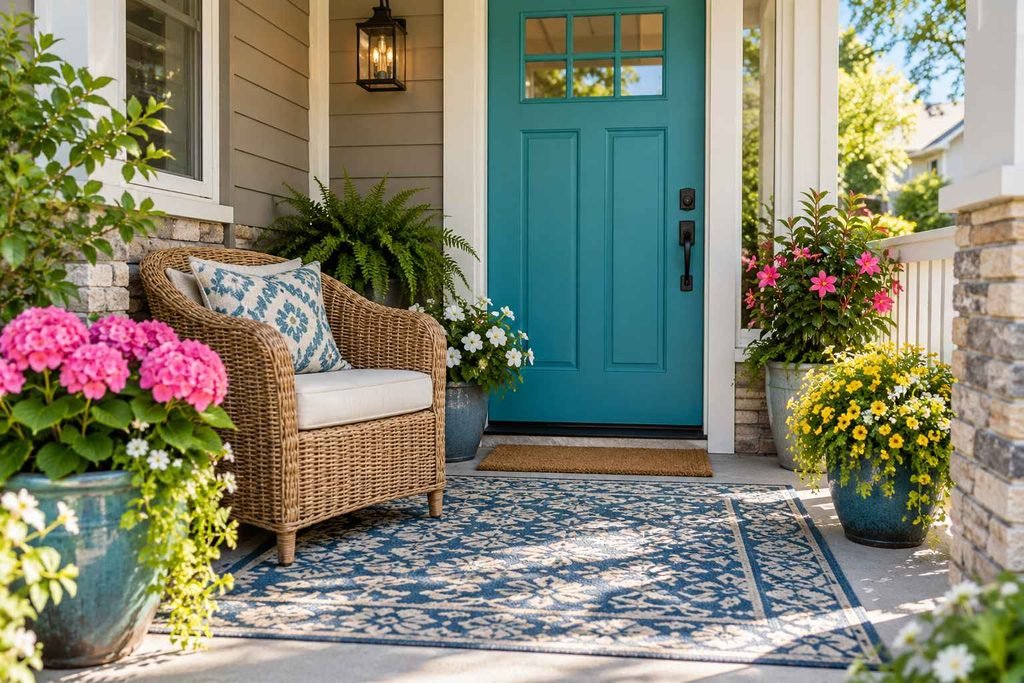
A mirror can reflect light and create the impression of additional depth, but outdoor placement requires some thought. Use mirrors only in sheltered areas where they can handle the conditions. A decorative mirror on a covered porch can reflect nearby plants, the sky, or architectural details. This creates visual depth without adding bulky furniture.
Choose a frame that suits the home’s exterior. Wood can create a softer appearance, while simple metal frames often suit modern spaces. Do not place a mirror where it creates an awkward reflection of the street or neighboring property. Instead, angle it toward greenery, decorative details, or an attractive part of the yard.
One medium-sized mirror is usually enough. Multiple mirrors can make a compact porch feel visually busy.
14. Create a Minimalist Porch
Minimalism can work extremely well when space is limited. Instead of trying to decorate every surface, select a few items that provide a clear purpose. A simple doormat, one planter, attractive lighting, and a clean front door may be enough. Keep the color palette controlled so the entrance feels calm rather than crowded.
Choose furniture with simple shapes and avoid unnecessary decorative pieces. A straight wooden bench can provide seating without dominating the porch. Storage should remain hidden whenever possible. Baskets, storage benches, and wall-mounted organizers can help keep everyday items out of sight.
Minimalism does not mean the porch needs to feel cold. Add warmth through natural wood, textured cushions, greenery, or a soft outdoor rug. The advantage of executing simple small front porch ideas is easy maintenance. Fewer objects mean less cleaning, less rearranging, and fewer places for dirt to collect.
15. Mix Natural Materials With Modern Details
Combining different materials can give a small porch personality. Wood, stone, woven textures, metal, and greenery can work together when you keep the overall palette simple. For example, a wooden bench can soften a modern concrete floor. A black metal light fixture can add structure beside a natural wood door. Woven baskets can introduce texture without taking up much room.
Try to repeat materials instead of introducing something completely different in every corner. If you use wood for the bench, you might repeat that finish in a planter or decorative shelf. Natural materials also help a compact porch feel warmer. They create visual texture without requiring bright colors or large decorations.
The finished space should look connected to the rest of the house. A porch feels more polished when its materials echo the home’s existing exterior.
Common Mistakes to Avoid
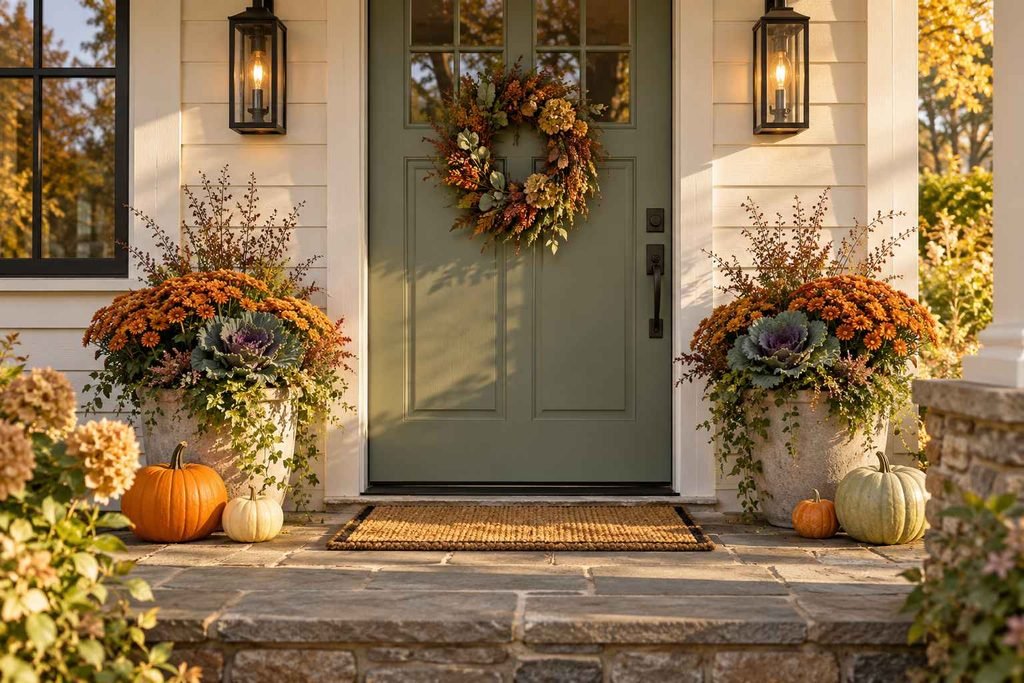
One common mistake is choosing furniture before measuring the porch. Always measure the available width and depth, then check the door swing and walking route. This simple step can prevent expensive purchases that do not fit. Another problem is using too many decorative objects. Small spaces become visually crowded quickly. Instead of adding five small accessories, choose one or two pieces that have a clear purpose.
Poor lighting can also reduce the appeal of the entrance. A porch should remain easy to navigate after dark. Use wall lights or overhead fixtures to illuminate the door and nearby steps. Do not ignore weather conditions either. Outdoor furniture and fabrics need to handle the climate where you live. Materials that work well in a dry climate may require extra care in areas with heavy rain or humidity.
Finally, avoid blocking drainage areas, vents, electrical fixtures, or access points. Decorative changes should never interfere with the practical functions of the porch.
How to Choose the Right Porch Furniture
Start with measurements rather than appearance. Determine how much floor space remains after accounting for the door, steps, railings, and walking path.
A narrow bench works well when you want seating without using too much depth. Folding chairs are useful when you occasionally need additional seats. Small nesting tables can provide a surface when needed and stay compact when not in use.
Material matters as well. Choose outdoor-rated wood, metal, wicker, or composite materials based on the weather conditions around your home. Cushions should use outdoor fabric that resists moisture and fading.
Color should complement the exterior rather than compete with it. Neutral furniture allows plants and accessories to provide color, while darker furniture can create a strong contrast against lighter walls. The best furniture is not necessarily the most decorative. It is the furniture that fits comfortably, supports the way you use the porch, and leaves enough space to move around.
Frequently Asked Questions
How can I decorate a very small front porch?
Focus on a few high-impact elements such as a statement door, attractive light fixture, narrow bench, planter, and outdoor rug. Keep the floor open and use walls or the ceiling for decoration.
What plants work well on a small porch?
Choose plants according to the available sunlight and climate. Hanging plants, narrow planters, window boxes, and vertical greenery work particularly well when floor space is limited.
Can I add seating to a narrow porch?
Yes. A shallow bench or compact folding chair can provide seating without blocking the entrance. Measure the space first to make sure people can still walk comfortably.
How do I make my porch look more welcoming?
Use warm lighting, greenery, a clean doormat, and a well-maintained front door. Small details can create a welcoming appearance without filling the porch with decorations.
What color is best for a small porch?
Light and neutral colors can help a compact area feel open, but you can also use a darker or brighter shade on the front door to create a focal point.
Are outdoor rugs suitable for small porches?
Yes. A properly sized outdoor rug can define the seating or entrance area and add texture. Choose a weather-resistant, low-profile design that does not interfere with the door.
How can I add plants without using floor space?
Try hanging baskets, wall planters, window boxes, or vertical gardens. These options move greenery upward while keeping the walking area clear.
Should a small porch have a bench or chairs?
That depends on the layout. A narrow bench often uses less space, while folding or compact chairs can provide more flexibility.
Can lighting make a small porch look bigger?
Good lighting can make the entrance feel more open and comfortable after dark. Wall-mounted fixtures are especially useful because they provide illumination without taking up floor space.
How do I keep a small porch from looking cluttered?
Limit the number of decorative items, choose multifunctional furniture, and keep everyday objects organized. Clear walkways make the biggest difference.
What are the most effective small front porch ideas for a tight budget?
Focusing on low-cost options like a fresh coat of door paint, layered doormats, and wall-mounted decor are great small front porch ideas that save money while completely changing your entryway.
Where can I find more inspiration for small front porch ideas?
You can explore design magazines, online home improvement blogs, or local home tours to discover stylish small front porch ideas tailored to your climate and space.
Conclusion
A compact entrance can still become one of the most attractive parts of your home. The right combination of furniture, lighting, plants, color, and texture can make a small porch feel comfortable without making it crowded.
The best small front porch ideas focus on practical choices. A narrow bench can provide seating, hanging planters can add greenery, and wall-mounted lighting can improve both style and visibility. A fresh front door, outdoor rug, or seasonal wreath can also create a noticeable change without a major renovation.
Start with the features you already have and work around them. Measure the space, protect the walking route, and choose pieces that serve a purpose. With a thoughtful layout and a few well-selected details, even the smallest front porch can become a welcoming extension of your home. By trying out different small front porch ideas, you can easily transform your entryway into a practical, beautiful space.
1 thought on “How to Decorate a Small Front Porch: Creative Ideas for Big Impact”