
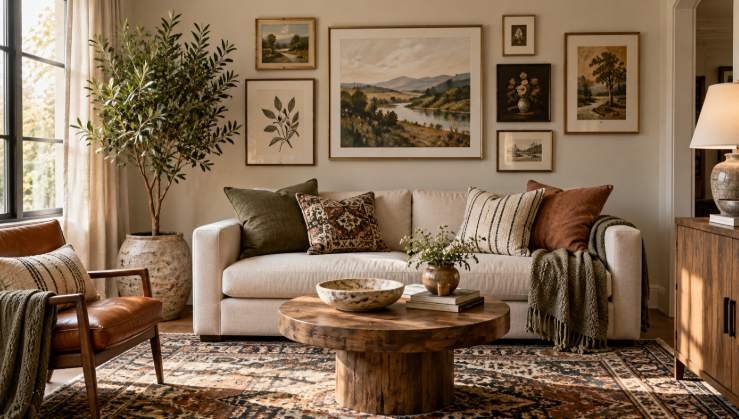
The best ideas for small lounge rooms start with how you actually use the space. Maybe it’s where the family watches TV, where friends gather, or where you curl up with a book after work. Once you know what the room needs to do, it becomes easier to choose furniture, lighting, and storage that fit without making it feel crowded.
A small lounge doesn’t need to be packed with miniature furniture or painted all white to feel comfortable. A well-sized sofa, a clear path through the room, layered lighting, and a few personal details can make even a compact space feel welcoming. The goal is to make every piece earn its place while still letting the room feel like home.
1. Start With a Simple Floor Plan
Before moving furniture or shopping, measure the room. Note the length of each wall, the location of windows and doors, and the spots where people naturally walk. A quick sketch on paper is enough to reveal whether a sofa will block an entrance or whether a side table will crowd a walkway.
Mark the room’s main purpose, too. A lounge used for conversation may need chairs facing each other. A TV room needs comfortable viewing angles. If the lounge doubles as a homework or work area, plan for a small desk or a place to tuck a laptop away.
One of the most useful ideas for small lounge rooms is to test a layout before buying anything. Use painter’s tape on the floor to outline a sofa, rug, or table. Walk around the shapes and see how much clearance remains. It’s a simple way to catch problems before they become expensive ones.
2. Pick One Main Focal Point
A clear focal point gives the eye somewhere to land. It might be a fireplace, a favorite piece of art, a large window, or the television. Arrange the main seating around that feature, then add supporting pieces only where they improve comfort or conversation.
In a room with a TV, the screen doesn’t have to dictate every decision. A sofa can face the TV while an accent chair turns slightly toward the rest of the seating. If the focal point is a window or fireplace, keep the furniture oriented toward it and place the TV on a secondary wall.
Try not to create several competing “centerpieces.” A bold gallery wall, oversized patterned rug, bright accent sofa, and large display cabinet can all vie for attention. Choose one or two elements to lead; let the rest of the room support them.
3. Choose Furniture That Fits the Room
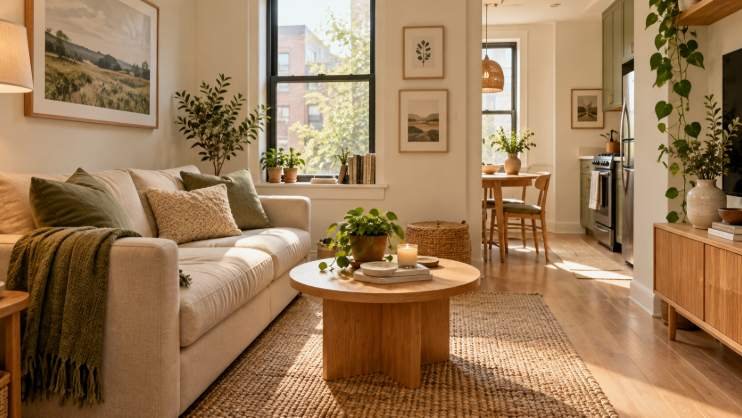
Small rooms benefit from furniture chosen with care, but “small furniture” doesn’t automatically mean “better.” Several tiny chairs and tables can make a lounge feel busy. A comfortably sized sofa paired with one lightweight chair may look more settled and provide better seating.
Before buying, measure the item’s full width and depth, including arms and cushions. Check the route into the room, too: doorways, stair turns, and hallways can be tighter than the lounge itself. A sofa that fits the floor plan still needs to fit through the front door.
Look for pieces with visible legs or a raised base if you want more floor to show beneath them. That open view can make a room feel less visually heavy, though it’s a style choice rather than a requirement. Architectural Digest’s small-room coverage also recommends considering how furniture scale and visual weight affect compact layouts.
4. Keep a Clear Walking Route
It’s frustrating when a coffee table or chair sits right in the way every time someone crosses the room. Decide where people need to walk—from the doorway to the sofa, for example—and protect that route when arranging furniture.
You don’t have to push every item against the walls. In some rooms, pulling the sofa a little forward can create a clearer path behind it or make the seating area feel more intentional. In others, placing the sofa against a wall will leave more open floor. Let the shape of your room decide.
These ideas for small lounge rooms are most successful when they suit everyday routines. If a layout looks elegant but people have to squeeze past a table, it probably needs adjusting.
5. Use a Rug to Define the Seating Area
A rug can make a group of furniture feel connected, even when the lounge shares space with a dining area or entryway. Choose a size that lets the front legs of the main seating rest on it, if the layout allows. A rug that is too small can look like a bath mat floating in the middle of the room.
In a narrow lounge, a rug can also guide the eye along the room rather than across it. Keep the color or pattern in conversation with your sofa and curtains, but don’t feel that every textile has to match. A quiet rug can balance patterned pillows; a patterned rug can bring personality to a plain sofa.
If you’re unsure about size, mark out a few options with paper or painter’s tape before ordering. Rugs can be awkward to return, and checking the outline first helps you avoid a piece that swallows the seating area or leaves the furniture disconnected.
6. Add Storage Without Filling the Floor
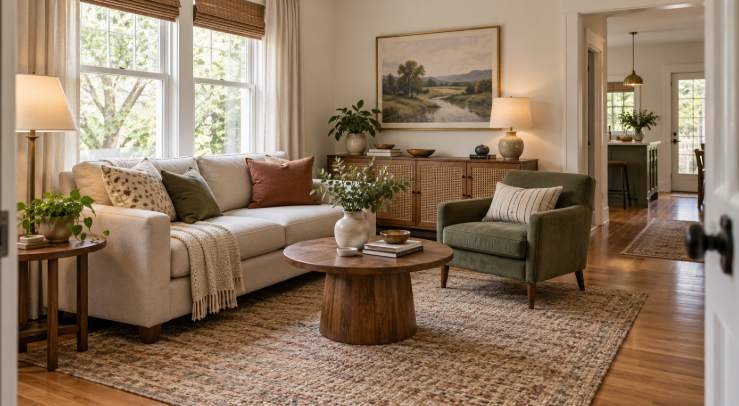
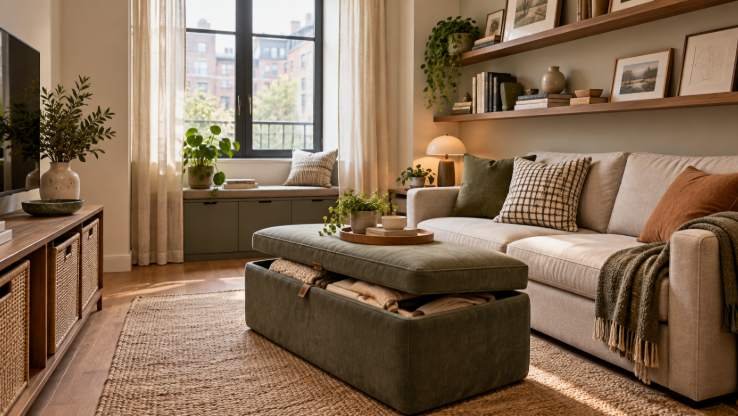
A lounge tends to collect the little things: remotes, books, chargers, toys, and blankets. Give those items a place to go. A storage ottoman can hold throws while serving as a footrest. A coffee table with a shelf or drawers offers a home for remotes. A slim cabinet may use wall space more efficiently than a wide console.
Think vertically as well as horizontally. A few shelves can display books or framed photos without taking up floor area. Wall-mounted shelves, however, should be installed securely and placed where people won’t bump into them.
Closed storage can help the room feel calmer because it hides everyday clutter. Open shelves bring warmth and personality, but they work best when you edit what goes on them. IKEA’s compact-room guidance also highlights flexible furniture and storage as ways to make better use of limited space.
7. Make the Most of the Walls
When floor space is limited, the walls can do more of the decorating work. Hang artwork, use a mirror, or install shelves for a small collection of books or objects. Grouping items together usually looks more intentional than spreading a lot of small decorations across every surface.
A mirror can reflect daylight or a view, which may make the room feel brighter. Try it where it reflects something pleasant, such as a window or a lamp—not a messy corner. A large mirror can become a focal point, while a small group of framed mirrors can make a more casual display.
If you rent, check what kinds of wall fixings are allowed before making holes. Removable picture strips may suit lightweight art, while heavier mirrors and shelves need secure hardware appropriate for the wall.
8. Use Color With Intention
Light colors can help a compact lounge feel airy, but they aren’t the only option. Warm white, soft beige, pale green, and muted blue are all possibilities. A deeper color can also make the room feel cozy, particularly when balanced with good lighting and lighter textiles.
One easy approach is to keep larger surfaces—walls, curtains, and the sofa—in a related palette, then bring in contrast through pillows, artwork, or a rug. Repeating one accent color in a few places can help the room feel joined up.
You can also paint the ceiling and trim to coordinate with the walls for a softer, less broken-up effect. If you prefer contrast, use it deliberately: a dark accent wall behind the sofa may add depth, while multiple sharp color changes can make a small room feel visually choppy.
9. Layer the Lighting
A single overhead light can leave corners dull and make the room feel flat at night. Combine general lighting with smaller sources, such as a floor lamp beside the sofa, a table lamp on a console, or a wall light near a reading chair. A dimmer can make it easier to shift from bright daytime use to a calmer evening mood.
Check where outlets are before choosing lamps. A cord stretched across the main walking path can become a trip hazard and make the room look messy. Where possible, place a lamp near an existing outlet or use a professionally installed wall fixture.
Good lighting is one of the simplest ideas for small lounge rooms to try because it can change the feel of the space without replacing the furniture. A mirror placed to catch natural light can help during the day; at night, lamps create smaller pools of warmth.
10. Choose Curtains That Suit the Windows
Curtains add softness and privacy, but their placement affects how the room feels. Hanging a curtain rod slightly above the window frame can draw the eye upward. Extending the rod beyond the window edges may let the curtains stack beside the glass when open, allowing more daylight into the room.
Pick a fabric that suits your needs. Sheer panels soften the light but offer limited privacy at night. Lined curtains block more light and may help with privacy, but can feel heavier in a compact space. If you have radiators or window seats, check that the fabric won’t cover something you need to access.
Blinds can be a practical alternative where curtains would crowd a radiator or narrow wall. You can also layer a simple shade with lightweight side panels for a finished look without a bulky arrangement.
11. Try a Small Accent Chair Instead of a Second Sofa
If you need more seating, a second full-size sofa may dominate the room. An accent chair can add a different angle and leave more open floor. Look for a shape that’s comfortable but easy to move when guests come over.
A swivel chair may work well in a multipurpose lounge because it can turn toward the TV, the window, or another person. A compact armless chair can be easier to fit beside a sofa, but sit in it before buying if you can. Slim arms can still be comfortable; no arms at all may not suit everyone.
Don’t add a chair simply because the layout looks incomplete. If your household rarely needs extra seating, a floor cushion or folding chair stored nearby may be a better use of the space.
12. Make a Small Lounge Feel Personal
A compact room can still hold meaningful things. Display a favorite framed print, a few travel finds, or family photographs. The trick is to give personal objects enough breathing room so each one can be noticed.
A small collection can feel more polished than a large number of unrelated accents. For example, group three ceramic pieces on a shelf, or create a gallery wall with frames in a shared color. Leave some blank wall space around the arrangement so it doesn’t feel crowded.
These ideas for small lounge rooms aren’t about stripping away everything you enjoy. They’re about choosing what you want to see and making space for it. A few well-loved pieces can make the room feel more like yours than a perfectly matched furniture set.
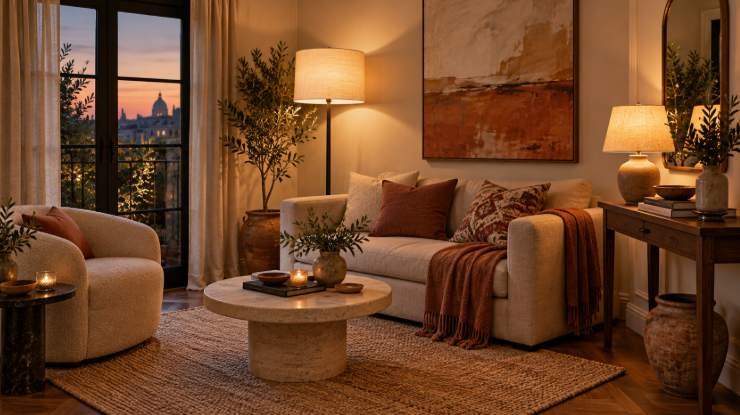
13. Use Plants Carefully
A plant can bring color and softness to a lounge, but it shouldn’t block a walkway or crowd a windowsill. A single floor plant in an unused corner may have more impact than several little pots scattered over every surface.
Choose a plant based on the light in your room and how much care you want to give it. If natural light is limited, look for a suitable low-light plant or use a good-quality artificial option. Keep plants away from places where pets or children might knock them over, and check plant safety if animals share the home.
You can also use a hanging planter or a shelf for smaller plants, provided the fixture is secure and the plants receive appropriate light. The aim is to add life without making the room harder to clean or move through.
14. Create a Flexible Lounge for More Than One Use
Many homes use the lounge for several things: TV, reading, remote work, kids’ play, and visiting guests. Instead of trying to create a separate zone for every activity, look for furniture that can shift roles. A side table can hold a drink during movie night and a laptop during the day. A storage ottoman can provide extra seating when friends visit.
If you work from the lounge occasionally, choose a spot where a small table and chair can be pulled into place, then put away when the workday ends. A basket for chargers and notebooks can keep the setup contained.
A folding screen or open bookshelf can mark a boundary in a combined living-dining space. Use one only if it helps with privacy or organization; a divider that blocks light and sightlines may make the room feel smaller.
15. Edit the Room Before You Buy More
When a lounge feels tight, the first answer isn’t always a new storage unit. Remove items that don’t serve a purpose, relocate pieces that belong elsewhere, and see how the room feels with more open space. You may find that a chair, side table, or stack of baskets is making the layout harder than it needs to be.
Try editing in stages. Clear one surface, then one corner, and pause to see what changes. Keep what you use, what you love, or what helps the room function. Donate or rehome pieces that no longer fit your home.
A room doesn’t need to be bare to feel tidy. Instead, give frequently used items a clear home and leave some visible space on tables and shelves. That balance makes everyday cleaning easier and lets your favorite details stand out.
Image 6 — Place near the end of the article
Filename: cozy-small-lounge-room-finished-design.webp
Alt text: “Finished small lounge with compact seating, soft lighting, and organized decor”
Image note: Use a wide landscape composition, and keep the file at 100 KB or less.
Frequently Asked Questions
How do I arrange furniture in a small lounge?
Start with the main purpose and focal point, then place the largest seating piece. Protect a clear route through the room and add only the tables or chairs you need. Measuring and marking furniture footprints before shopping can help you test the layout.
What colors work well in a small lounge?
There’s no single right palette. Light neutrals can make the room feel bright, while deeper shades can create a cozy atmosphere. Pick colors you enjoy and repeat them in a few places so the room feels connected.
Do mirrors make a small room look bigger?
A mirror can reflect light and add a sense of depth, especially when it reflects a window or another bright part of the room. Its effect depends on placement, so check what it will reflect before hanging it.
Should all the furniture go against the walls?
No. In some layouts, keeping furniture against the walls opens up the middle; in others, moving the sofa forward creates a more useful seating area. Try both arrangements if the room allows, and keep walking routes clear.
How can I add storage without making the lounge look cluttered?
Use storage that serves another purpose, such as an ottoman or a coffee table with a shelf. Wall shelves can also free up floor space. Keep open displays edited, and use closed storage for everyday items you’d rather keep out of sight.
Conclusion
A comfortable lounge is shaped by more than its square footage. Start with the room’s main purpose, choose furniture that fits the layout, and keep a clear route through the space. Then build in storage, lighting, color, and personal details at a pace that suits your budget.
The most useful ideas for small lounge rooms are the ones that make everyday life easier while still reflecting your style. Measure before buying, test arrangements when you can, and don’t be afraid to remove a piece that isn’t earning its place. A compact lounge can feel welcoming, practical, and distinctly yours.
2 thoughts on “Ideas for Small Lounge Rooms: 15 Ways to Make a Cozy Space Work Better”