
Bedroom storage ideas can make a room feel calmer without adding furniture or turning it into a cluttered closet. The key is to use the space you already have—under the bed above eye level behind doors and inside furniture—while keeping items easy to reach. A few chosen changes can help a small bedroom work better and can make a large bedroom feel less cluttered.
The best bedroom storage ideas also fit the way you live. If you reach for clothes every morning store them where they are easy to see. If you have blankets or seasonal items give them a less prominent spot. Use the suggestions below as a starting point then choose the ones that suit your room, your budget and your belongings.
Before You Add More Storage
Take a look at what you own before buying organizers. Group similar items together then decide what you use daily only in a particular season. This helps you choose furniture that solves a problem instead of adding another place to collect clutter.
Measure the room too. Include door swings, closet doors, drawers and the walking space around the bed. A storage piece that technically fits may still make the room awkward to use. In a space a narrow cabinet or wall shelf can be more helpful than a deep dresser.
17 Bedroom Storage Ideas to Make Better Use of Space
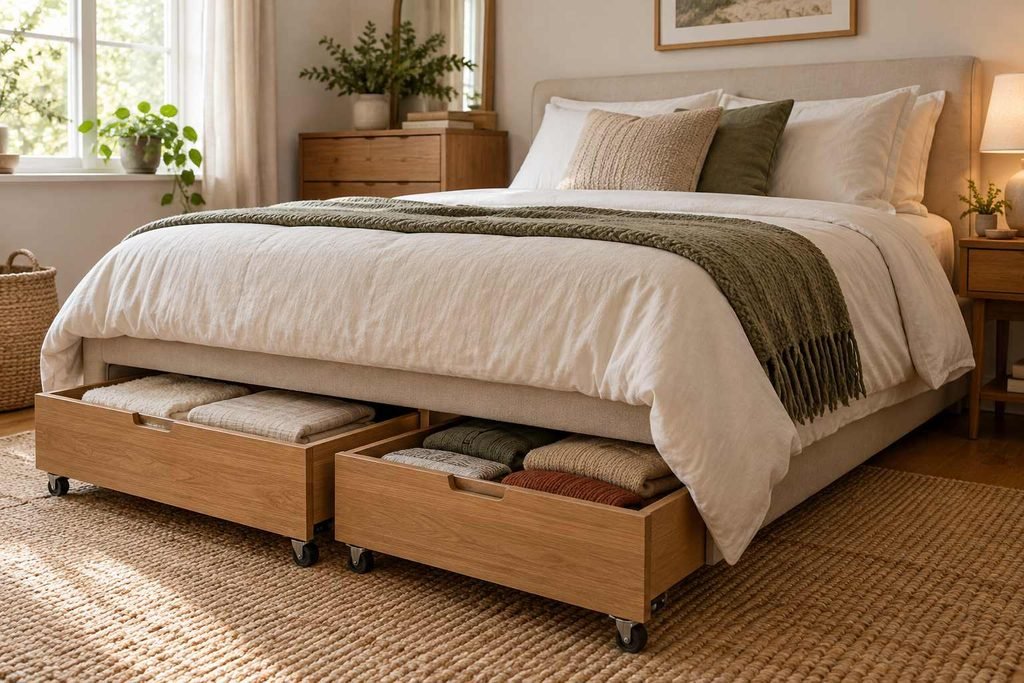
1. Add rolling drawers under the bed
The space beneath the bed is useful for items you do not need every day. Rolling drawers or low‑profile bins can hold sheets, extra blankets, shoes or off‑season clothing. Choose containers that fit the bed’s clearance and slide out easily.
If the bed is close to the floor measure before shopping. A few inches of clearance can determine whether a standard bin will fit. Use lidded containers for items that need protection from dust and avoid storing damp or washed fabrics before they are completely dry.
2. Choose a bed with built‑in storage
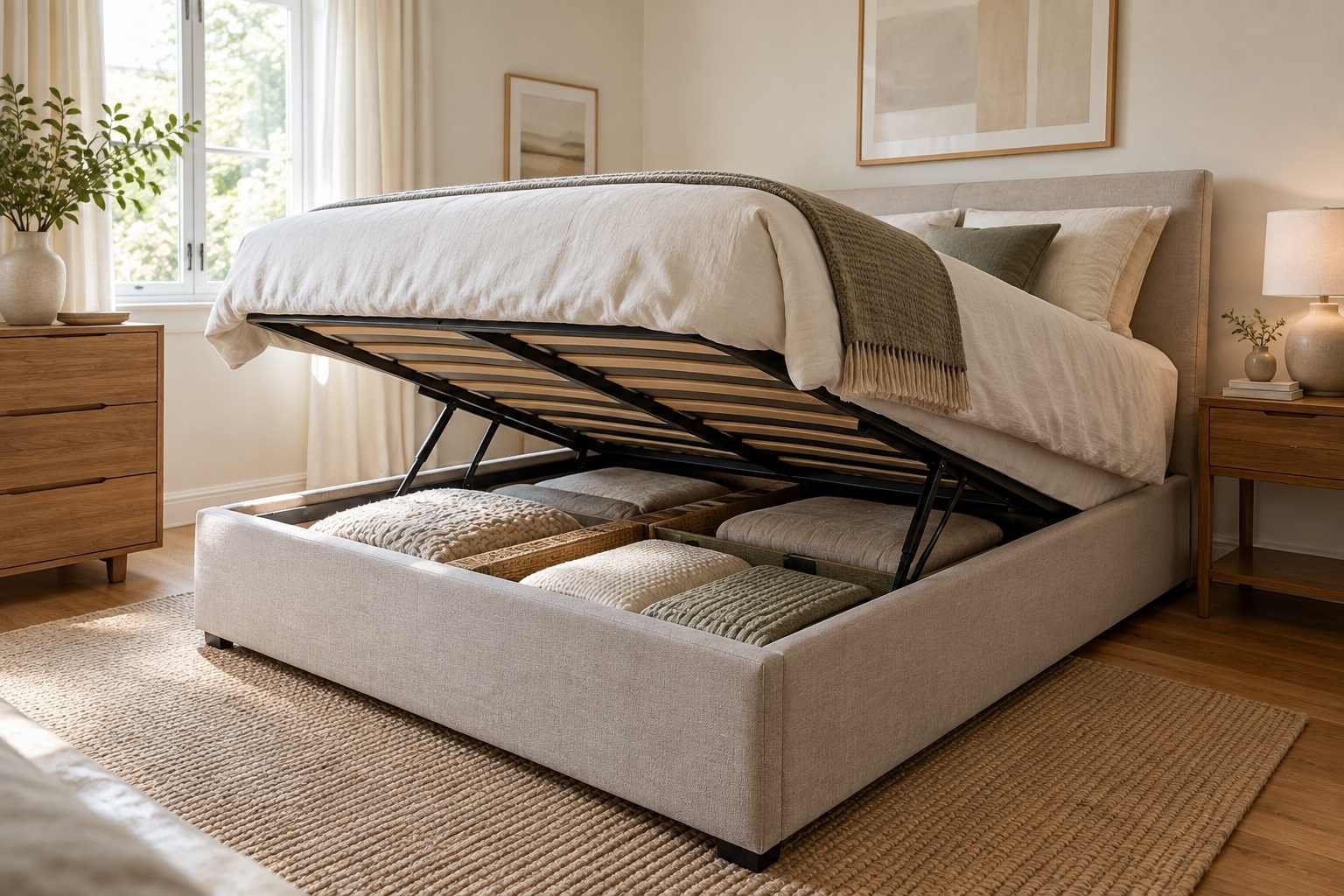
A storage bed combines sleeping space with drawers or a lift‑up compartment. Drawer models make it easy to separate belongings while an ottoman‑style bed can hold items such as comforters and pillows.
Think about how much room you have around the bed. Drawers need space to open so they may not work well beside a wall or in a walkway. A lift‑up model avoids that issue though you will need room to raise the mattress safely.
3. Use a headboard with shelves or cubbies
A bookcase headboard can provide a home for books, glasses, charging cables and a reading light. It may replace a bedside table in a room leaving more floor space beside the bed.
Keep the display simple. A few useful items look tidy; many small objects can make the bed area feel busy. If you use a headboard with built‑in lighting or outlets check that the cords can be managed neatly and safely.
4. Install shelves above the bed
A shelf above the headboard can hold decor, a small row of books or a couple of baskets. It makes use of wall space that might otherwise go unused.
Plan the height carefully so the shelf feels secure and does not crowd the bed. Use wall anchors or attach it to studs and avoid placing heavy or fragile items above where you sleep. If you prefer a look hang a shallow picture ledge instead of a deep shelf.
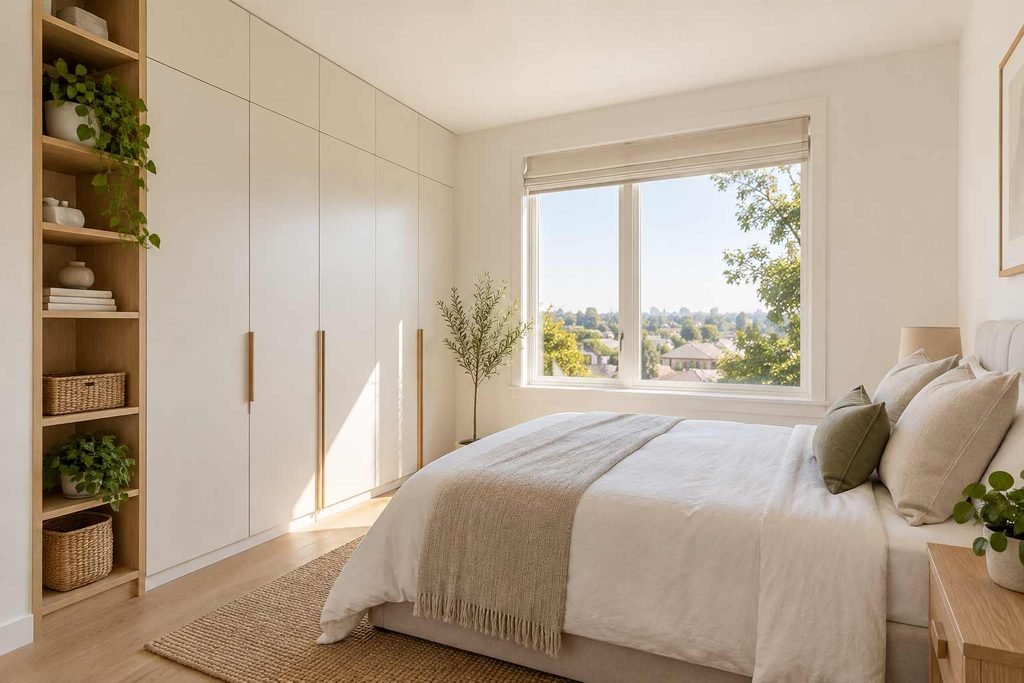
5. Extend storage upward with a wardrobe
A tall wardrobe makes use of vertical space and can hold more than a short dresser with the same floor footprint. Look for shelves, a hanging rail and a top compartment for luggage or seasonal items.
In a bedroom a wardrobe, with a simple finish and doors that match the wall can feel less imposing. Before choosing one check the ceiling height. Make sure the doors can open without hitting the bed or another piece of furniture.
6. Make the closet work harder
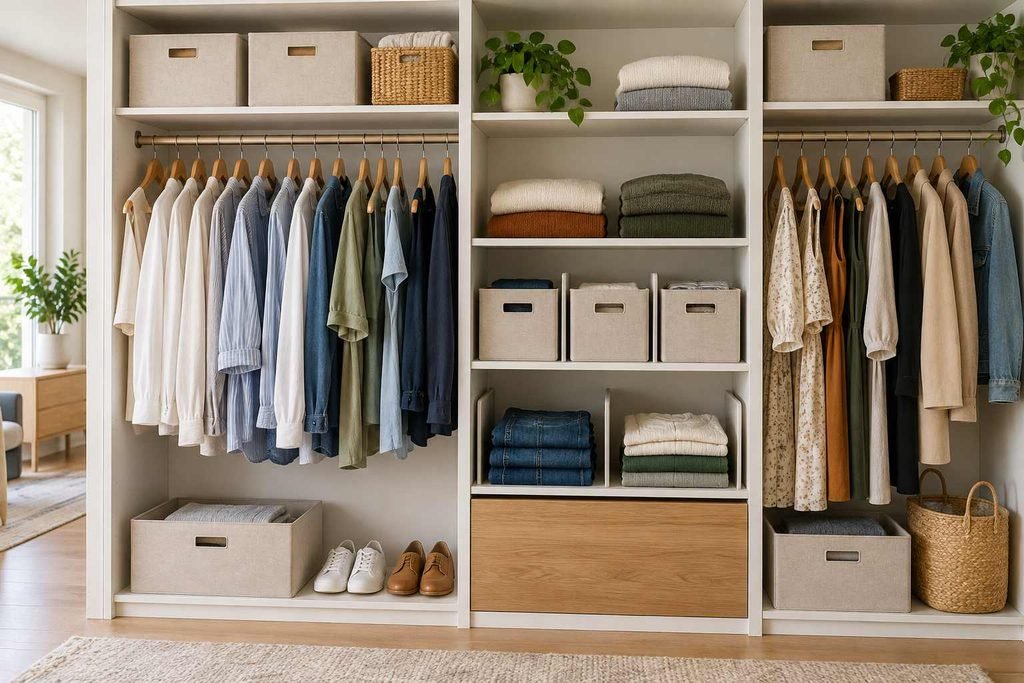
Closet space is often not used fully because the shelves or rods do not fit what you keep.
A second hanging rod can double the space for items.
Shelf dividers can keep folded clothing in stacks and small bins can group accessories.
Keep clothes that you wear often at eye level.
Place items that you use sometimes higher up and shoes or bags lower down.
If you rent a home removable organizers or tension rods can give flexibility without an installation.
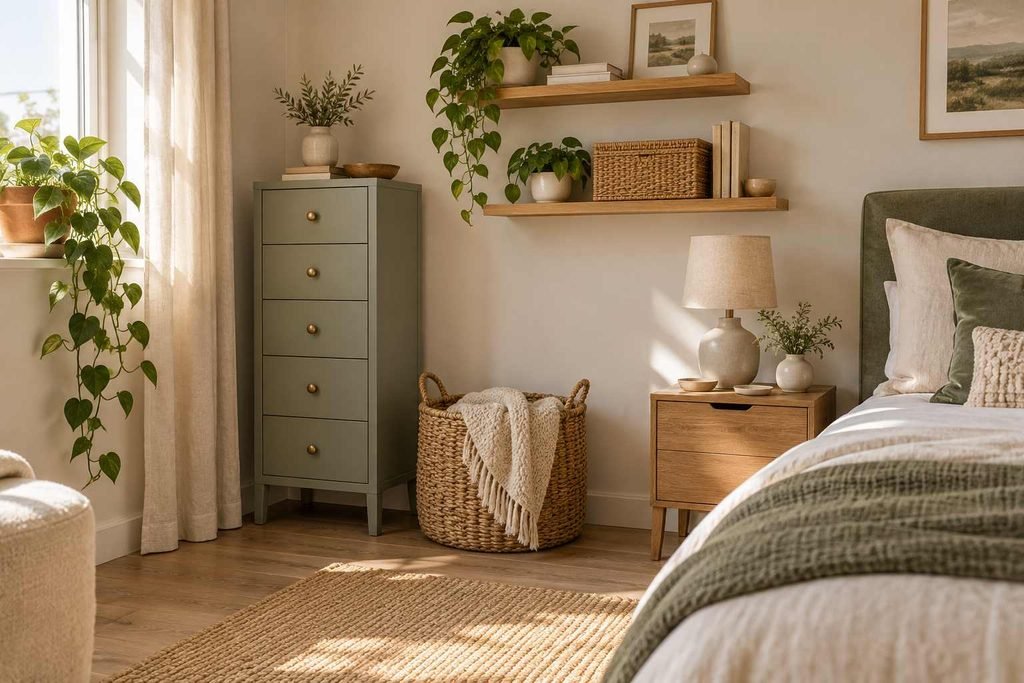
7. Add a chest of drawers
A slim chest can fit beside a closet behind a door or in a narrow gap that a wider dresser cannot use. It is handy for socks, sleepwear, accessories and other small items.
Check drawer depth well as width. A narrow dresser can be surprisingly useful when its drawers are deep enough for folded clothes. This idea works best when you measure the spot before choosing furniture.
8. Replace a nightstand with a floating shelf
A small floating shelf can serve as a bedside surface without taking up floor space. It can hold a lamp, phone, book or glass of water. Choose a shelf enough for your essentials but avoid overloading it.
For hidden storage use a small wall-mounted cabinet with a drawer. Either option can make it easier to clean beneath the bed and create a look than a large nightstand.
9. Use the back of the bedroom door
An over-the-door organizer can hold scarves, belts, accessories or shoes. Hooks can keep a robe, bag or tomorrow’s outfit off the floor. This is especially useful when closet space is limited.
Make sure the organizer does not stop the door from closing or scrape the wall. For a quieter crowded look choose a slim rack and store only the items you use regularly.
10. Put a storage bench at the foot of the bed
A bench with a lift-up lid or drawers can hold bedding, pillows or seasonal accessories. It also offers a place to sit while getting dressed.
Measure the walkway between the bench and the nearest wall or furniture. If opening the bench would block the room choose a model with drawers or a smaller upholstered ottoman with a top.
11. Use matching bins on high shelves
Baskets and bins can make open shelving easier to manage. Use them for items that’re useful but not attractive on display, such as spare cables, small accessories or extra linens. Matching containers help the room look more orderly.
Add labels if several people share the storage. Place heavier bins on shelves and keep the top shelves for lighter items you do not need every day.
12. Add a dresser that doubles as a vanity
A dresser can serve as a getting- area when paired with a mirror and a small stool. Choose a surface large enough for a few daily items and store the rest inside drawers or trays.
This bedroom storage idea can reduce the need for a vanity table. Keep the surface clear to use comfortably and make sure the mirror is positioned where the lighting is good.
13. Try a wall-mounted bedside cabinet
A wall-mounted cabinet can provide storage while keeping the floor visible beneath it. It works well in rooms where a standard nightstand would make the walkway feel tight.
Install it at a height and secure it according to the manufacturer’s instructions. Before mounting check for outlets, switches and cables so the placement does not interfere with them.
14. Organize clothes by season
Keep the clothes you wear now in the accessible drawers and closet sections. Store off-season garments in bags, labeled bins or under-bed containers. This makes it easier to see what you actually have and reduces drawers.
Before storing clothing, wash and dry it thoroughly. Keep containers away from areas and leave a little room so fabrics are not compressed too tightly for long periods.
15. Use drawer dividers, for small items
Dividers can separate socks, underwear, belts, jewelry and other small belongings. Of shifting through a crowded drawer you can see what’s there at a glance.
Adjustable dividers can help when drawer sizes differ. Measure the inside of each drawer first. Leave enough space so the drawer closes without catching on the divider.
16. Create a landing spot for daily essentials
A tray or shallow bowl on a dresser can hold keys, a watch or items you empty from your pockets. Give belongings one clear place so they do not spread across the nightstand, chair and dresser.
Keep the landing spot small. If it becomes a place for everything it can quickly turn into another clutter pile. A tray works best when you empty or reset it regularly.
17. Use a bed frame for bulky items
A lift‑up bed frame can store comforters, extra pillows and luggage in one hidden compartment. It is an option when drawers are hard to open or when you need space for larger items.
Make sure the lifting mechanism is easy to use and that the bed is placed where the mattress can be raised without hitting a fixture or shelf. Store clean, dry items inside and avoid packing the compartment tightly that it becomes hard to access.
How to Keep Bedroom Storage Looking Calm
Storage only helps when it is easy to maintain. Give each category a home and return items to that spot after using them. If a drawer or bin becomes difficult to close it may mean the area needs an edit.
Use closed storage for things you do not want on display then leave a breathing room on open shelves and surfaces. A mix of drawers, baskets and a few visible items usually feels more relaxed than filling every shelf.
It also helps to avoid buying organizers before measuring. Write down the width, depth and height of the spaces you want to use. Then choose pieces that fit those dimensions and match the way you use the room. The helpful bedroom storage ideas are the ones that make daily routines easier rather than adding extra steps.
Frequently Asked Questions
What are some practical bedroom storage ideas for a room?
Start with the space under the bed the back of the door and the wall above a dresser or headboard. A tall wardrobe floating bedside shelf or narrow chest can add storage without taking up much floor area as a wide piece of furniture.
How can I add storage without making my bedroom feel crowded?
Choose furniture that serves than one purpose keep walkways clear and use the full height of the room where appropriate. Closed storage can also make a space feel tidier by keeping items out of sight.
What should I store under the bed?
Under‑bed space is useful for bedding, seasonal clothing, shoes and other items you do not need daily. Use dry containers and check that they fit beneath the frame before buying them.
Is open shelving a choice for a bedroom?
It can be, for books a few decorative pieces or items you use often. Keep shelves from becoming overloaded. Use baskets to group smaller belongings that might otherwise look untidy.
How do I decide what storage furniture to buy?
First identify what needs a home and measure the space available. Then consider how often you will use the items and whether drawers, shelves hanging space or hidden compartments would suit them best.
Conclusion:
A bedroom does not require a complete makeover. Start with one problem area, such, as a closet or a lack of bedside space and choose a storage solution that fits your bedroom storage and routine. With bedroom storage ideas, underused corners and empty wall space can become useful while the room still feels comfortable and personal.
1 thought on “Bedroom Storage Ideas: 17 Smart Ways to Make More Room”