
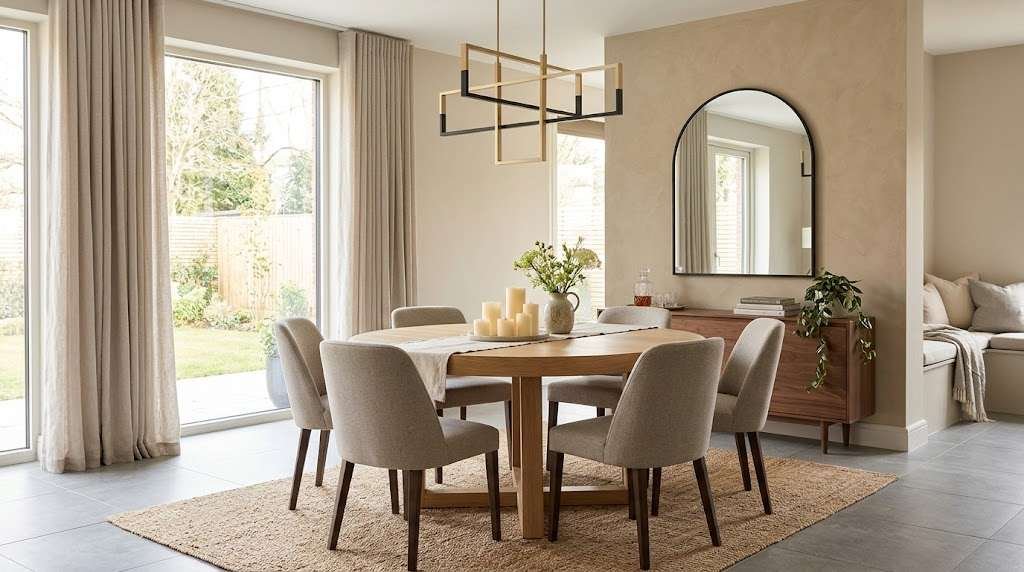
The dining room is more than a place to eat—it is where families gather for everyday meals, friends come together for dinner parties, and special occasions are celebrated. With the right dining room decor, you can transform a plain eating area into a warm, stylish, and inviting central hub for your home.
Whether you have a formal dining room, a small eating nook, or an open-concept space, thoughtful decorating can make the room feel far more comfortable and visually attractive. You don’t necessarily need brand-new furniture or a complete renovation to make an impact. Simple changes—such as updating lighting, hanging artwork, styling table accessories, adding curtains or rugs, and choosing complementary wall colors—can make a dramatic difference.
If you are looking for design inspiration, these 20 dining room decor ideas can help you create a space that reflects your personality while remaining practical for everyday life.
20 Stylish Dining Room Decor Ideas
1. Choose a Beautiful Dining Table
The dining table is usually the anchor piece of the room, making it the perfect starting point for your design plan. Select a table that fits the proportions of the space while leaving ample room for people to walk comfortably around it.
A solid wood table creates a timeless, traditional atmosphere, while glass or metal surfaces lend a contemporary feel. For a farmhouse look, consider a rustic wooden table paired with comfortable upholstered or wooden chairs. If your space is compact, a round or extendable table works wonders—round tables promote easier conversation and navigate tight corners efficiently.
2. Add a Statement Chandelier
Lighting plays a massive role in setting the ambiance. A striking chandelier or pendant fixture serves as a captivating visual focal point while illuminating the table below.
Classic crystal or tiered chandeliers suit traditional spaces, while modern rooms benefit from sleek linear fixtures, drum pendants, or matte black geometric designs. Center the light fixture above the dining table and choose a size proportional to both the table and the surrounding room.
3. Create an Accent Wall
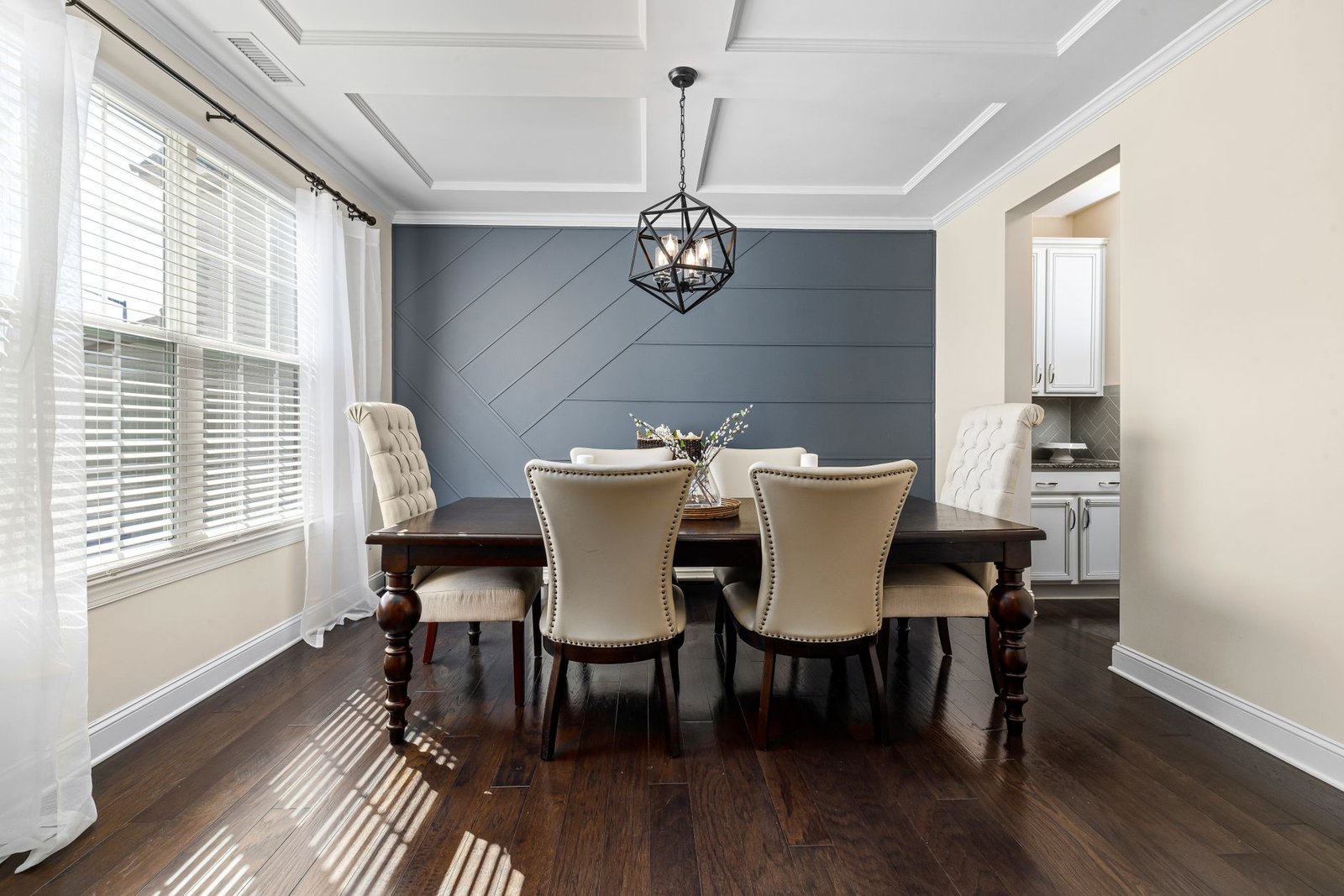
An accent wall adds depth and character without requiring you to redecorate the entire room. Paint one wall in a rich contrasting color, or apply textured or patterned wallpaper.
Deep navy, forest green, charcoal, warm beige, and earthy terracotta bring sophisticated drama. If you prefer a lighter feel, opt for muted sage, soft cream, or subtle geometric or botanical wallpaper patterns.
4. Ground the Space with a Large Area Rug
An area rug brings warmth, texture, and cohesion to the dining space. It is particularly useful in open-plan homes to visually define the dining area from the adjacent kitchen or living room.
Ensure the rug is large enough so that all chair legs remain comfortably on the surface even when pulled out from the table. Low-pile, stain-resistant, or easy-to-clean materials are the most practical choices for dining spaces.
5. Hang Impactful Artwork
Artwork is one of the easiest ways to inject personality into your dining room. A single oversized canvas, a curated gallery wall, or a collection of framed photography makes empty walls feel intentional.
Choose artwork that complements your color palette—botanical prints suit natural wood furnishings, while bold abstract art elevates modern, minimal interiors.
6. Incorporate a Stylish Sideboard
A sideboard or credenza offers the ideal balance of functional storage and decorative display. It hides away extra dinnerware, linens, serving platters, and candles while offering a flat surface for lamps, vases, and trays.
Style the wall above your sideboard with a large mirror or artwork, and keep the surface styled with a mix of tall and short objects for visual balance.
7. Decorate with a Curated Centerpiece
Your dining table doesn’t need to be overly cluttered, but a simple centerpiece keeps it looking styled even when not in use.
A tall vase filled with fresh or dried flowers, a decorative wooden bowl, or a tray stacked with pillar candles and small ceramics are classic choices. Keep arrangements low enough so guests can easily view one another across the table during meals.
8. Bring in Natural Elements
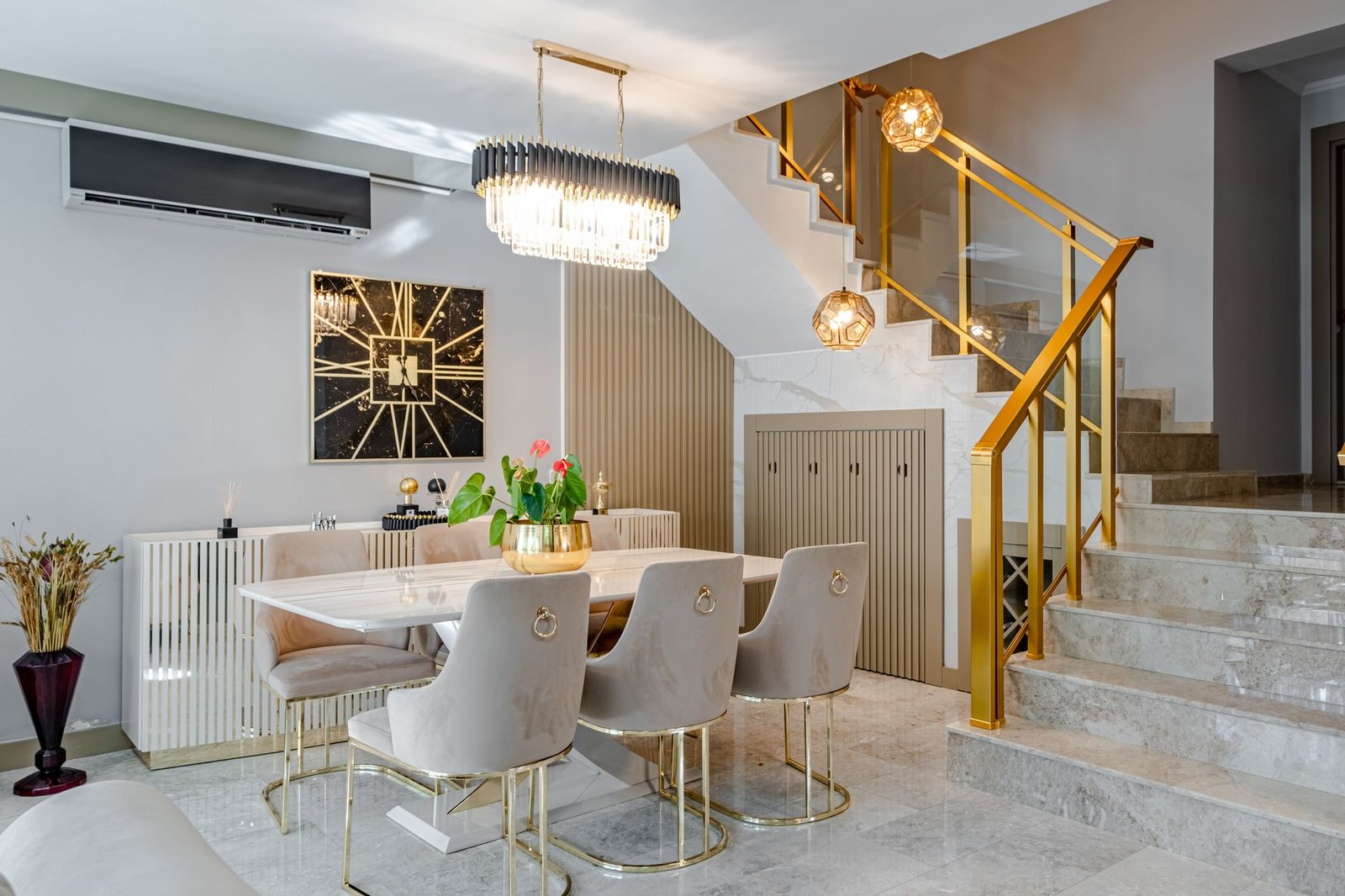
Incorporating organic materials creates an inherently warm and inviting atmosphere. Integrate natural textures such as solid wood, stone, woven rattan, wicker, linen, and greenery.
Pairing a wooden table with woven dining chairs and lush indoor potted plants instantly softens hard surfaces and adds freshness to the room.
9. Mix Dining Chair Styles
Matching furniture sets are no longer a design requirement. Mixing different chair styles gives your dining room a curated, collected-over-time aesthetic.
Try pairing a classic wooden table with upholstered host chairs at the head and simpler wooden side chairs along the edges. To maintain harmony, ensure the mixed chairs share a common thread, such as material, color palette, or height.
10. Install a Large Mirror
A strategically placed mirror reflects both natural light and artificial illumination, making your dining room feel significantly brighter and larger.
Hang a large framed mirror above a sideboard or on the wall directly opposite a window. Traditional rooms suit ornate gilded frames, while modern spaces look best with sleek rectangular, arched, or circular designs.
11. Try a Modern Farmhouse Look
The modern farmhouse style combines cozy rustic charm with clean, contemporary details. Start with a solid wood dining table and pair it with comfortable neutral textiles, matte black metal accents, and simple lighting.
Complete the look with ceramic vases, woven baskets, and botanical prints for a casual yet refined feel.
12. Design an Elegant Formal Dining Room
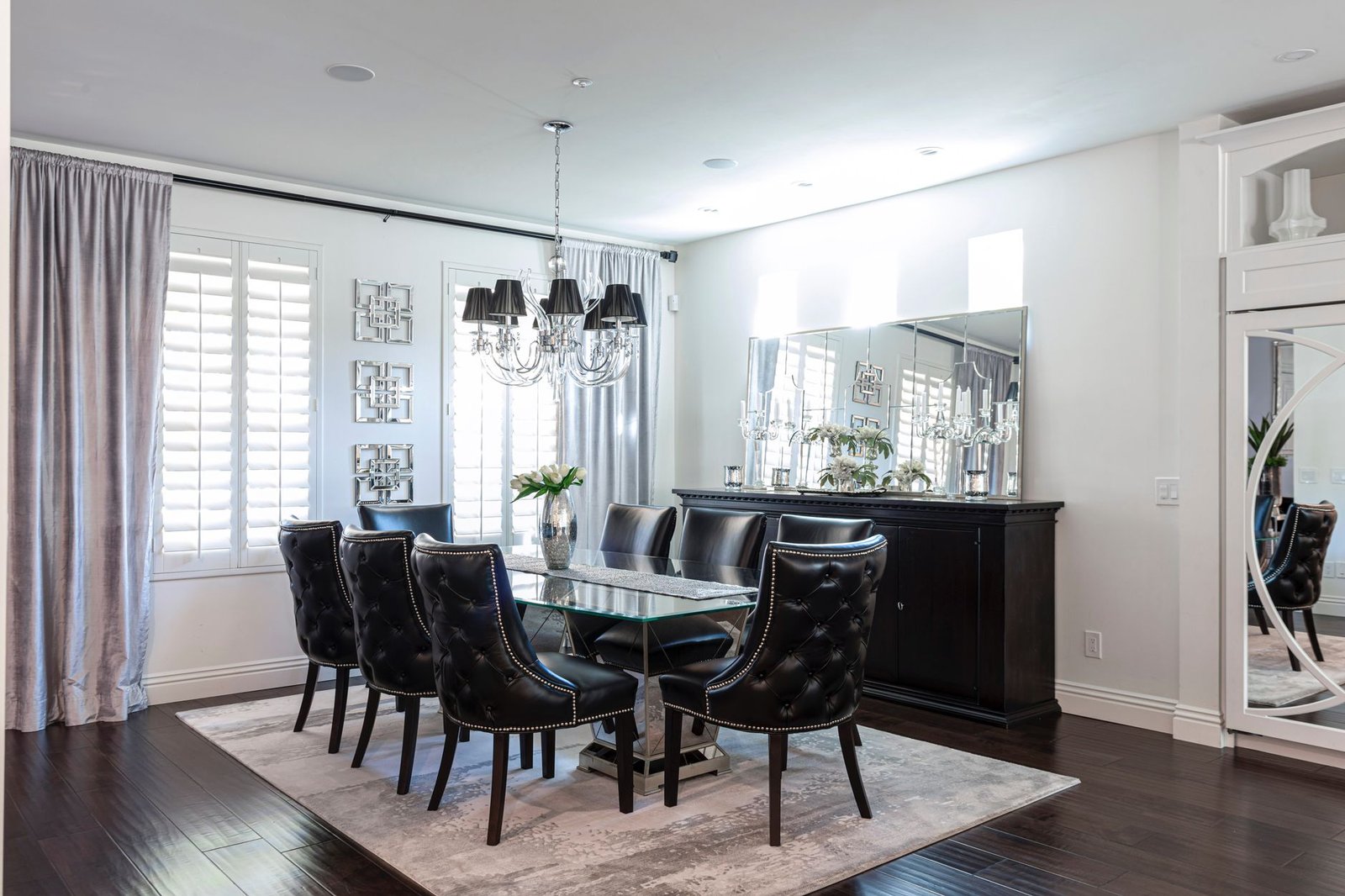
If you frequently host formal dinner parties or holiday gatherings, lean into a polished, high-end atmosphere.
A polished dark wood table, fully upholstered dining chairs, an ornate crystal chandelier, floor-length drapery, and a rich color palette (navy, emerald, burgundy, or rich taupe) set an elegant tone. Display fine glassware or china behind a glass-front china cabinet or buffet.
13. Incorporate Layered Lighting
Relying on a single overhead light fixture can make a room feel flat or overly bright. Layered lighting gives you flexibility for different times of day and moods.
Combine your central ceiling fixture with wall sconces, accent lamps on a sideboard, and flickering candles to create a warm, intimate glow during evening meals.
14. Add Softness with Drapes and Curtains
Window treatments frame your windows while introducing softness, color, and sound absorption.
Airy linen or sheer curtains in neutral tones keep the room feeling light and breezy. For added drama or formal elegance, opt for velvet or patterned floor-length drapes. Hang curtain rods high and wide to create the optical illusion of taller ceilings and larger windows.
15. Optimize a Small Dining Area
Lacking space doesn’t mean sacrificing style. In compact spaces, select streamlined furniture with slim profiles or opt for a built-in banquette or dining bench.
A round pedestal table eliminates sharp corners, making traffic flow smoother around the room. Utilize wall-mounted shelving instead of bulky floor cabinets to preserve floor space.
16. Embrace a Neutral Color Palette
Neutral shades—cream, beige, warm taupe, soft gray, and warm wood tones—create a serene, timeless backdrop.
To keep a neutral palette from feeling flat, layer rich textures such as linen napkins, woven rugs, sculpted ceramic vases, and plush upholstered chair cushions. You can easily rotate accent colors through seasonal flowers and tableware.
17. Introduce a Pop of Accent Color
If a completely neutral room feels too understated, introduce vibrant accent colors through targeted decor pieces.
Select one or two key accent shades—like cobalt blue, sage green, or warm terracotta—and repeat them across the room in seat cushions, artwork, glassware, and curtains for a cohesive, intentional look.
18. Style Open Shelving
Open shelving transforms everyday kitchen and dining items into functional art. Use shelves to display decorative serving bowls, wine glasses, cookbooks, potted plants, and ceramic jugs.
Avoid overcrowding the shelves—leave breathing space between groupings of items at varying heights to maintain an uncluttered, curated look.
19. Create a Cozy Dining Nook
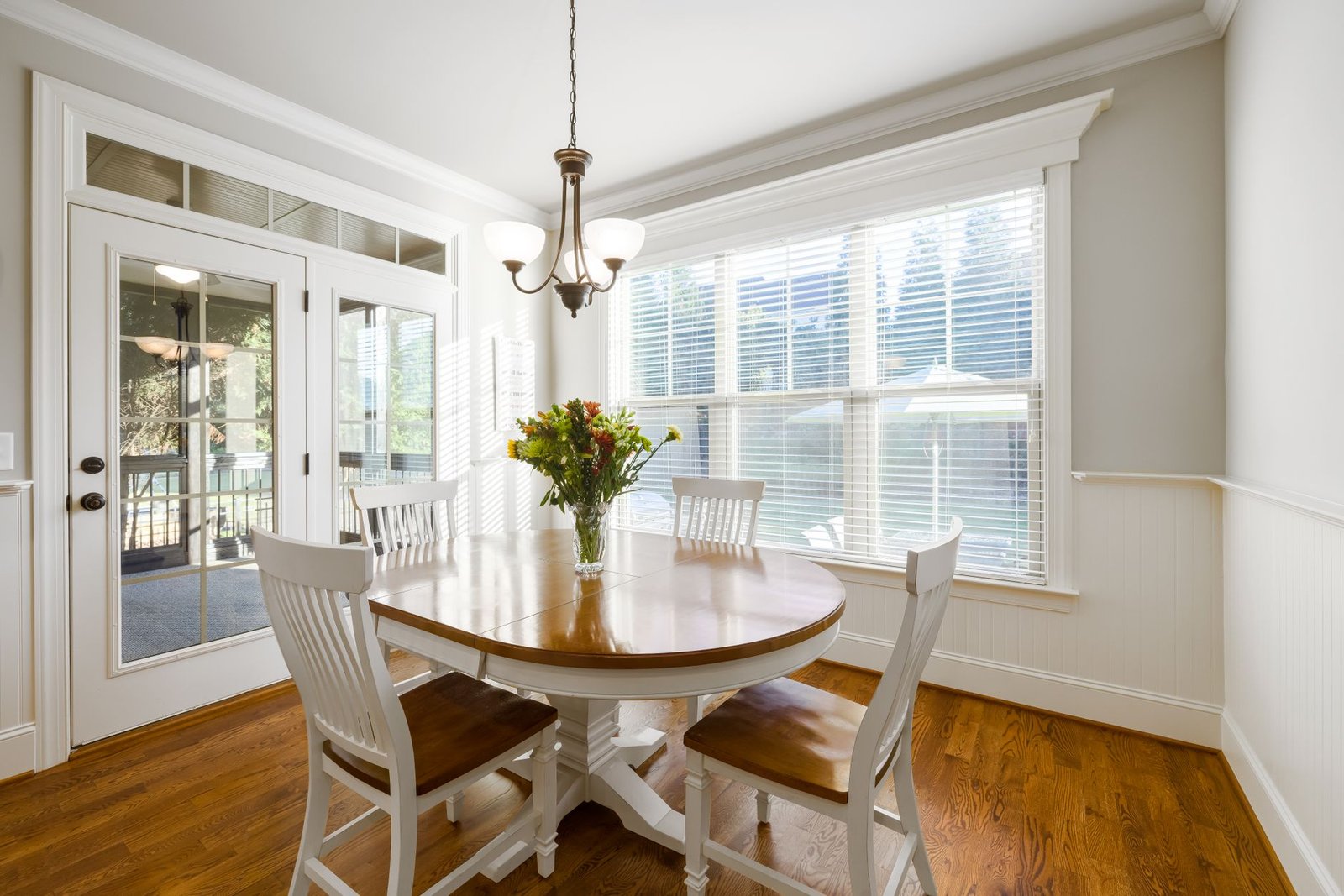
A dining nook is a clever layout solution for kitchen corners, apartments, or smaller open-concept homes.
Install an L-shaped or straight built-in bench against a wall, then pull up a round table and a couple of lightweight chairs. Add throw pillows and seat cushions to make the corner an inviting spot for morning coffee or casual family meals.
20. Keep the Decor Functional and Accessible
The best dining room decor balances aesthetics with practical daily function. Ensure walking paths remain clear, chairs can be pulled out smoothly without hitting walls, and frequently used items are easy to reach.
Use closed storage in sideboards to conceal clutter, and choose durable, easy-to-clean fabrics for seating if you have young children or pets.
Planning & Style Guidance
How to Choose the Right Dining Room Style
Before buying furniture, decide how you want the space to feel and function:
- Casual & Relaxed: Look to natural woods, comfortable banquettes, linen textiles, and soft earthy palettes.
- Sleek & Contemporary: Focus on clean lines, metal or glass surfaces, statement lighting, and minimal clutter.
- Traditional & Formal: Incorporate rich dark woods, detailed molding, chandelier lighting, and symmetrical layouts.
Choose a style that flows naturally into the adjacent rooms so your home feels cohesive.
How to Make a Dining Room Look Luxurious on a Budget
You don’t need a high-end budget to achieve a sophisticated look:
- Fresh Paint: A fresh coat of rich paint or a dark accent wall instantly elevates the room.
- Proportional Lighting: Swap out a basic builder-grade light fixture for a stylish statement pendant or chandelier.
- Floor-to-Ceiling Drapes: Hanging curtain rods near the ceiling makes the room feel taller and more grand.
- Declutter: Keep table surfaces clear of daily clutter—a single elegant vase with greenery makes a bigger statement than many small items.
Common Decorating Mistakes to Avoid
- Incorrect Scale: Choosing a table or rug that is too large or too small for the room’s dimensions. Always measure twice before purchasing.
- Harsh, Single-Source Lighting: Relying only on bright overhead lighting without dimmers or accent lights.
- Prioritizing Looks Over Comfort: Buying beautiful dining chairs that are uncomfortable to sit in for extended periods.
- Overcrowding: Packing too much furniture into the space, blocking traffic flow and doorways.
Frequently Asked Questions
What should I place on my dining table when it’s not in use?
A simple, low-profile centerpiece works best. Consider a decorative tray with candles, a low ceramic bowl, or a vase filled with fresh branches or greenery.
How big should a dining room rug be?
The rug should extend at least 24 inches beyond all sides of the table so that chairs stay on the rug even when pulled out for seating.
What are the most timeless colors for a dining room?
Warm neutrals (cream, beige, warm gray) and classic dark tones (navy blue, forest green, deep charcoal) offer timeless appeal that won’t quickly go out of style.
How do I decorate a small dining space without cluttering it?
Opt for a round pedestal table, use wall space for lighting and mirrors, consider bench seating against a wall, and stick to a light, cohesive color palette.
Conclusion
Creating a beautiful dining room doesn’t have to be complicated or overwhelming. By combining the right foundational furniture with thoughtful lighting, rich textures, personal artwork, and practical storage, you can build a space that is as functional for everyday living as it is welcoming for special gatherings.
Start with a great dining table, establish a clear color palette, and layer in accessories like rugs, plants, and statement lighting to craft a room your family and friends will love spending time in.
2 thoughts on “Dining Room Decor: 20 Stylish Ideas to Create a Beautiful and Welcoming Space”